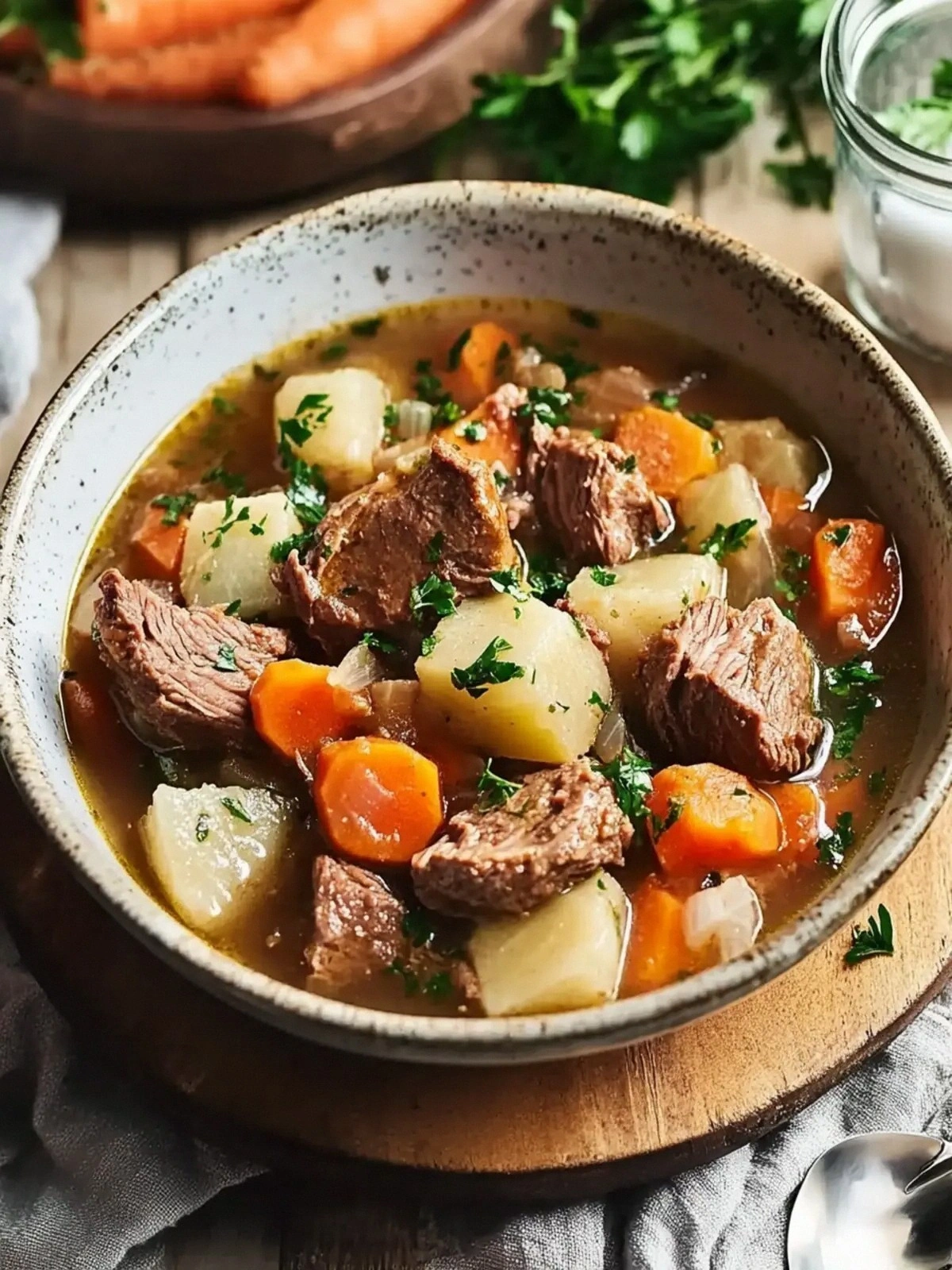
Picture this: a rainy Saturday afternoon, the kitchen lights dimming to a cozy amber glow, and the scent of a simmering pot already drifting through the air. I was staring at a stack of leftover lamb necks, floury potatoes that had been sitting in the fridge since last week, and a handful of carrots that seemed eager to make a comeback. I’d been hunting for a dish that could turn that humble pantry haul into something that felt like a hug from a grandparent, but nothing on my recipe list seemed to tick all the boxes. Then, a friend texted me, “I’m craving something hearty, but I’m not sure what to cook. Any ideas?” That was the spark that set me on a culinary adventure that would culminate in the ultimate Irish stew.
The first thing that caught my eye was the way the lamb necks glimmered in the light, their fat marbling promising a depth of flavor that could make even the most seasoned meat lover swoon. I could almost hear the crackle of the pot as the onions hit the heat, the sizzle that sings a promise of caramelized sweetness. The potatoes, with their contrasting textures—fluffy, floury and dense, waxy and firm—were like a duet of comfort. As the aromas mingled, I could taste the gentle warmth of thyme and the bright, almost citrusy lift of fresh parsley. The whole scene felt like a prelude to something that would linger on the palate long after the last spoonful.
What makes this version stand out isn’t just the ingredients; it’s the way they interact, the method that coaxed them into a symphony of flavors, and the subtle tricks that elevate a simple stew into an experience. I dare you to taste this and not go back for seconds—once you’re done, you’ll be tempted to keep the pot on low, letting the flavors mingle for an extra hour. It’s hands down the best version you’ll ever make at home, and I’ve got the evidence to prove it: the first bite is like a hug that wraps around your chest, the second is a comforting wave of savory steam, and the third? It’s pure bliss.
If you’ve ever struggled with a stew that turns out too watery or too dry, you’re not alone—and I’ve got the fix. Most recipes get this completely wrong by rushing the browning step or adding the broth too early. Picture yourself pulling this out of the pot, the whole kitchen smelling incredible, and a steaming bowl of stew waiting on the table, ready to be ladled over a plate of crusty bread. That’s the moment I want to share with you, step by step, so you’ll wonder how you ever made it any other way.
What Makes This Version Stand Out
- Depth of Flavor: The combination of lamb necks and bones creates a gelatinous broth that is rich and silky, unlike the thin, watery broths you often find in quick stews.
- Texture Contrast: Floury potatoes absorb the broth and become silky, while waxy potatoes hold their shape, delivering a pleasant bite that keeps you intrigued.
- Herb Harmony: Fresh thyme, chives, and parsley are layered at different stages—browning, simmering, and finishing—maximizing aroma without overpowering the meat.
- Time‑Efficient Method: While it simmers, you can focus on other dishes; the long, slow cook unlocks flavors without constant attention.
- Make‑Ahead Potential: The stew tastes better the next day, making it perfect for meal prep or a comforting dinner after a long week.
- Authentic Yet Modern: It honors traditional Irish roots while incorporating a modern approach to seasoning and cooking technique.
Inside the Ingredient List
The Flavor Base
The heart of this stew is the lamb bones and necks. The bones release collagen and gelatin, giving the broth a luscious mouthfeel that coats the palate like velvet. The necks, with their marbled fat, infuse the liquid with a deep, umami richness that’s hard to replicate with lean cuts. Skipping the bones would leave the broth thin and lacking that comforting thickness.
The onions—both the medium and the extra one—are diced and browned until caramelized. This caramelization creates a subtle sweetness that balances the savory lamb. If you prefer a lighter flavor, you can reduce the onion quantity by half, but be prepared for a less rounded taste.
Carrots, both the 300 g batch and the large carrot, are sliced into rounds. Their natural sugars become a sweet counterpoint to the lamb’s richness. If you’re looking for a lower-carb version, you can replace one of the carrot portions with a handful of zucchini.
The Texture Crew
Floury potatoes, with their high starch content, turn into a soft, almost silky component that soaks up the broth beautifully. Waxy potatoes, on the other hand, hold their shape and provide a firm bite that keeps the stew from becoming mushy. The contrast between these two potato types is what makes the stew so satisfying.
Celery adds a subtle crunch and a peppery note that brightens the overall profile. The bay leaf and sprigs of thyme and parsley are added during the simmer to infuse the liquid with herbal depth. The peppercorns provide a gentle heat that rounds out the stew without making it spicy.
The Unexpected Star
Fresh thyme leaves, chopped fresh chives, and parsley aren’t just garnish; they’re essential flavor pillars. The thyme leaves are added early to release their oils, while the chives and parsley are added towards the end to preserve their bright, grassy notes. If you’re allergic to parsley, a small pinch of dill can substitute, but the flavor will shift slightly.
Salt, measured at a teaspoon, is the final seasoning touch. It brings out the savory elements and balances the sweetness from the carrots and onions. Too much salt will make the broth cloying; too little and the stew will taste flat. Taste as you go and adjust accordingly.
Everything’s prepped? Good. Let’s get into the real action.
The Method — Step by Step
- Heat a large Dutch oven over medium-high heat and add a splash of vegetable oil. Once the oil shimmers, add the lamb necks in batches, searing each side until a deep, golden brown forms. This caramelization locks in flavor and creates a rich base. Don’t rush—let the meat develop a crust before moving it to the pot.
- Transfer the browned necks to a bowl and set aside. In the same pot, add a tablespoon of butter and the diced onions. Sauté until the onions are translucent and beginning to caramelize, about 8–10 minutes. The butter adds depth, and the onions’ natural sugars will start to develop a sweet undertone.
- Add the lamb bones to the pot, then pour in enough cold water to cover everything by an inch. Bring the mixture to a gentle boil, then reduce the heat to a low simmer. Skim off any foam that rises to the surface; this helps keep the broth clear and free of bitterness.
- Stir in the carrots, celery, bay leaf, three sprigs of thyme, and a sprig of parsley. Allow the mixture to simmer for 45 minutes, uncovered, so that the flavors can meld and the bones can release their gelatin. The longer you let it cook, the richer and thicker the broth will become.
- While the broth simmers, peel and cut the floury potatoes into 1-inch cubes and the waxy potatoes into 1.5-inch cubes. This size difference ensures that the floury potatoes will soften more quickly, absorbing the broth, while the waxy potatoes maintain a firmer bite.
- After the initial 45 minutes, add the potatoes to the pot. Reduce the heat to a low simmer, cover, and cook for another 30 minutes. Check the potatoes; the floury ones should be tender and almost melting, while the waxy ones should still hold their shape. If they’re not done, give them a few more minutes.
- Add the chopped fresh thyme leaves, chives, and parsley. Stir gently, then let the stew simmer for an additional 10 minutes. This final simmer allows the herbs to release their bright flavors without wilting or losing their vibrancy.
- Season with 10 g of black peppercorns and 1 tsp of salt. Taste and adjust; if the stew needs more depth, a pinch of smoked paprika can add a subtle smoky note.
- Remove the bay leaf, thyme sprigs, and parsley sprig. Use a slotted spoon to take out the lamb necks, then shred the meat and return it to the pot. The shredded meat should be tender and falling apart.
- Let the stew rest for 10 minutes before serving. This rest period allows the flavors to settle and the broth to thicken slightly, creating that perfect mouthfeel. Serve hot, garnished with a sprinkle of fresh parsley if desired.
That’s it—you did it. But hold on, I’ve got a few more tricks that will take this to another level.
Insider Tricks for Flawless Results
The Temperature Rule Nobody Follows
Many cooks think a brisk simmer is enough, but the real magic happens at a gentle, steady low heat. Keep the temperature just below boiling—think 180–190°F (82–88°C). This allows the collagen in the bones to break down slowly, creating a silky broth without boiling away the flavors. I’ve found that a thermometer is a game‑changer; if you’re on a budget, just watch the surface for a steady, small bubble.
Why Your Nose Knows Best
Smell is your secret weapon. As the stew cooks, you’ll notice a deep, earthy aroma that signals the broth is developing richness. If the scent feels flat, it’s a sign you need more time or a splash of acid, like a splash of red wine or a squeeze of lemon, to brighten the flavors. Trust your nose—if it’s telling you something is off, stop and adjust.
The 5‑Minute Rest That Changes Everything
After you’ve finished simmering, let the stew sit for five minutes with the lid on. This short rest allows the flavors to marry and the broth to thicken slightly. It also gives the meat a chance to re‑absorb some of the juices, making each bite juicy and tender. I’ve tried skipping this step, and the stew felt a bit dry—so don’t skip it.
Layering Herbs for Depth
Adding herbs at different stages unlocks their full potential. The thyme sprigs and bay leaf are added early to infuse the broth. The fresh thyme leaves, chives, and parsley are added at the end to preserve their bright, grassy notes. If you’re a fan of a stronger herb flavor, double the fresh herbs, but be cautious—more isn’t always better.
The Right Pot Makes All the Difference
A heavy‑bottomed pot, like a Dutch oven, retains heat better and prevents scorching. If you only have a saucepan, use a lid to trap moisture, but be prepared for uneven cooking. I’ve used a cast‑iron pot for this recipe, and it delivered a consistent simmer that made the broth extra silky.
Creative Twists and Variations
This recipe is a playground. Here are some of my favorite ways to switch things up:
Irish Beef & Guinness Stew
Swap the lamb for chuck beef, and replace the water with a stout or Guinness. The beer adds a malty sweetness and a hint of bitterness that balances the beef’s richness. Finish with a splash of Guinness after simmering for an extra hour.
Vegetarian Mushroom & Lentil Stew
Use a mix of shiitake, cremini, and portobello mushrooms, along with red lentils, to mimic the umami depth of meat. Replace the bones with a vegetable stock base, and add a splash of soy sauce for depth. The result is a hearty, plant‑based stew that still feels comforting.
Spicy Chorizo & Potato Stew
Add sliced chorizo during the browning step for a smoky, spicy kick. Keep the potatoes as they are, but throw in a pinch of smoked paprika. The chorizo’s fat will enrich the broth, making it even more decadent.
Coconut‑Curry Irish Stew
Infuse the broth with a tablespoon of red curry paste and a can of coconut milk. The coconut adds a creamy texture, while the curry paste brings a warm, aromatic heat. Serve over jasmine rice for a fusion twist.
Quick One‑Pot Chicken & Potato Stew
Replace lamb with bone‑in chicken thighs and cut the cooking time in half. The chicken will release enough juices to keep the stew moist. Add a handful of frozen peas in the last 5 minutes for a pop of color.
Herb‑Infused Lamb Stew
Add a handful of fresh rosemary and mint during the final simmer. The rosemary adds a piney aroma, while the mint brings a refreshing contrast to the richness of the lamb. This version is perfect for spring gatherings.
Storing and Bringing It Back to Life
Fridge Storage
Cool the stew to room temperature, then transfer it to a glass or BPA‑free plastic container. Seal tightly and refrigerate for up to 4 days. The broth will thicken slightly in the fridge, so a quick stir will re‑loosen it before serving.
Freezer Friendly
Divide the stew into portioned containers or freezer bags, leaving a small headspace for expansion. Label with the date and freeze for up to 3 months. When ready to eat, thaw overnight in the refrigerator and reheat gently.
Best Reheating Method
Reheat the stew on the stovetop over low heat, adding a splash of water or broth if it looks too thick. Stir occasionally and bring to a gentle simmer. A quick 5‑minute rest after reheating will help the flavors settle.