Love this? Pin it for later! 📌
I first developed the recipe after a particularly memorable farmers-market haul: a plump pasture-raised bird, candy-stripe beets the size of baseballs, and a bunch of thyme so fragrant I kept sticking my nose in the bag on the drive home. One-pan dinners were all I had energy for back then—new baby, full-time job, zero free hands—and I wanted something that felt intentional enough for company but required nothing more than a hot oven and a big rimmed sheet pan. Fifteen years later the vegetables change with the seasons, but the technique—dry-brine, herbed butter under the skin, high-heat start, low-heat finish—has never failed me. If you can salt meat the night before and remember to preheat the oven, you can serve a restaurant-worthy dinner while still having time to pour yourself a glass of wine.
Why This Recipe Works
- Overnight dry-brine: Seasons the meat to the bone and yields shatter-crisp skin without any extra oil.
- Compound butter under the skin: A mix of softened butter, lemon zest, and fresh herbs self-bastes the breast as it melts.
- Two-temperature roast: 425 °F start jump-starts browning; 350 °F finish keeps the white meat juicy.
- Vegetables tucked under the rack: They bathe in savory drippings while roasting evenly—no burnt edges.
- One-pan cleanup: Everything cooks together; the sheet pan’s juices become your gravy with a five-minute whisk.
- Flexible timing: Bird can rest up to 45 min while you reheat sides, making it perfect for entertaining.
Ingredients You'll Need
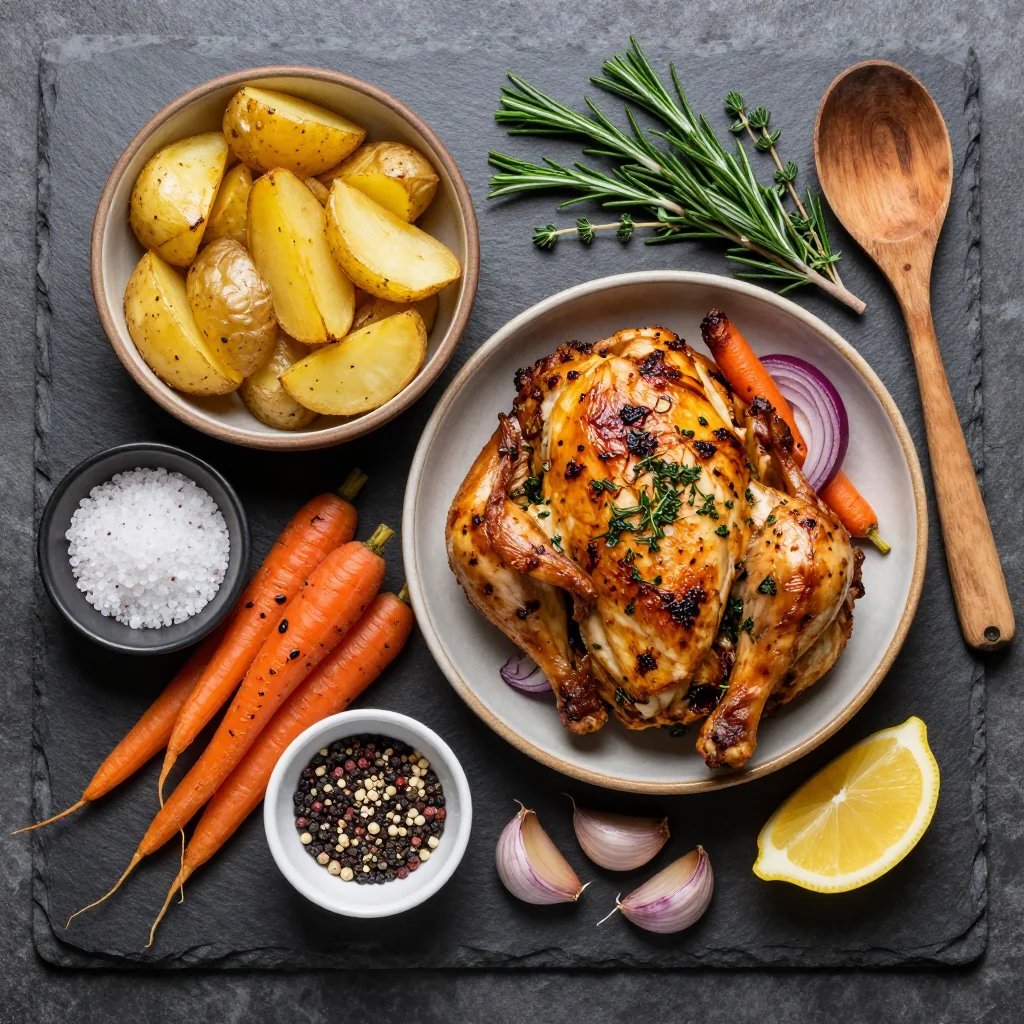
Choose the best bird you can find—pasture-raised if possible—and give it a sniff through the wrapper; it should smell faintly sweet, never sour or metallic. A 4–4½ pound chicken feeds four generously with leftovers for tomorrow’s sandwiches. If you’re feeding a crowd, roast two smaller chickens rather than one behemoth; they cook more evenly and you get double the crispy skin.
Chicken: Fresh is ideal, but if you’re using frozen, thaw 48 hours in the refrigerator on a rimmed tray to catch drips. Remove the giblets (save for stock) and pat the cavity dry—surface moisture is the enemy of browning.
Butter: European-style (82 % fat) produces the richest herb paste, but standard American butter works. Vegans can swap refined coconut oil; the flavor changes subtly but the technique stays the same.
Herbs: I use a 50-50 mix of soft (parsley, basil) and woody (thyme, rosemary). If fresh herbs aren’t available, use half the amount of dried—except rosemary, which becomes brittle and sharp when dried; skip it rather than compromise.
Garlic: Smashed cloves roast into mellow, spreadable nuggets. Elephant garlic is too mild; stick with standard bulbs for punch.
Lemon: Zest perfumes the butter; sliced lemon stuffed in the cavity perfumes the meat. Meyer lemon is sweeter, but conventional works.
Root vegetables: Carrots, parsnips, and fingerling potatoes are classic, but golden beets, turnips, or celery root add intrigue. Cut everything to roughly the same size so they finish together.
Olive oil: A tablespoon tossed with the veg prevents sticking and encourages caramelization. Use a mild, fruity oil, not a peppery finishing oil that will taste bitter after 45 minutes in a hot oven.
White wine: A half-cup splashed into the pan at the halfway mark keeps the vegetables from drying out and gives you a head start on pan sauce. Use anything you’d happily drink; cheap “cooking wine” is loaded with salt and off-flavors.
Chicken stock: Homemade is gold, but low-sodium boxed stock is fine. Warm it slightly before adding to the hot pan to prevent thermal shock and warping.
How to Make Herb Roasted Chicken and Root Vegetables for Dinner
Dry-brine the chicken
Pat the chicken dry inside and out with paper towels. Mix 1 tablespoon kosher salt, 1 teaspoon freshly ground black pepper, and ½ teaspoon baking powder. Sprinkle evenly over all surfaces, including the cavity. Place the bird breast-side up on a wire rack set inside a rimmed sheet pan and refrigerate, uncovered, at least 12 hours and up to 48. The skin will turn parchment-dry and taut—exactly what you want.
Make the herb butter
In a small bowl, combine 4 tablespoons softened unsalted butter, 1 tablespoon finely chopped parsley, 1 tablespoon finely chopped thyme leaves, 2 teaspoons chopped rosemary, 2 teaspoons lemon zest, 1 minced garlic clove, ½ teaspoon kosher salt, and a few grinds of pepper. Mash with a fork until homogenous. Reserve 1 tablespoon for the vegetables; keep the rest covered at room temperature so it stays spreadable.
Season under the skin
Slide your fingers between the breast meat and the skin, starting at the neck cavity, being careful not to tear. Loosen the skin over the thighs as well. Using a small spoon or your fingers, slip the herb butter under the skin and spread it in an even layer by gently pressing on top. This insulating layer bastes the meat and carries flavor directly to the flesh.
Stuff and truss
Fill the cavity with 1 quartered onion, 1 halved lemon, and 4 smashed garlic cloves. Cross the legs, loop a 12-inch piece of kitchen twine around the ankle joints, and tie tightly. Tuck the wing tips behind the back. Trussing promotes even cooking and gives the bird a tidy silhouette for presentation.
Prep the vegetables
Peel 3 large carrots and cut on a diagonal into 2-inch pieces. Peel 2 parsnips and cut similarly. Halve 1 pound fingerling potatoes lengthwise. Toss with reserved tablespoon herb butter, 1 tablespoon olive oil, ½ teaspoon salt, and ¼ teaspoon pepper. Spread in a single layer on a second rimmed sheet pan; they’ll join the chicken later.
Roast high, then low
Preheat oven to 425 °F with rack in lower-middle position. Place the chicken, still on its rack, in the oven legs-first (the dark meat needs the most heat). Roast 20 minutes. Reduce temperature to 350 °F, rotate pan 180°, and add vegetables to the lower rack. Continue roasting 45–55 minutes more, basting twice with the accumulating drippings, until the thickest part of the breast registers 160 °F and the thighs 175 °F on an instant-read thermometer.
Deglaze and rest
Transfer chicken to a carving board and tent loosely with foil; rest at least 15 minutes (internal temp will climb to 165 °F). Meanwhile pour ½ cup warm chicken stock and ¼ cup dry white wine into the hot sheet pan, scraping with a wooden spoon to dissolve the caramelized fond. Simmer on the stovetop over medium heat 3 minutes until slightly thickened; whisk in 1 tablespoon cold butter for glossy gravy.
Carve and serve
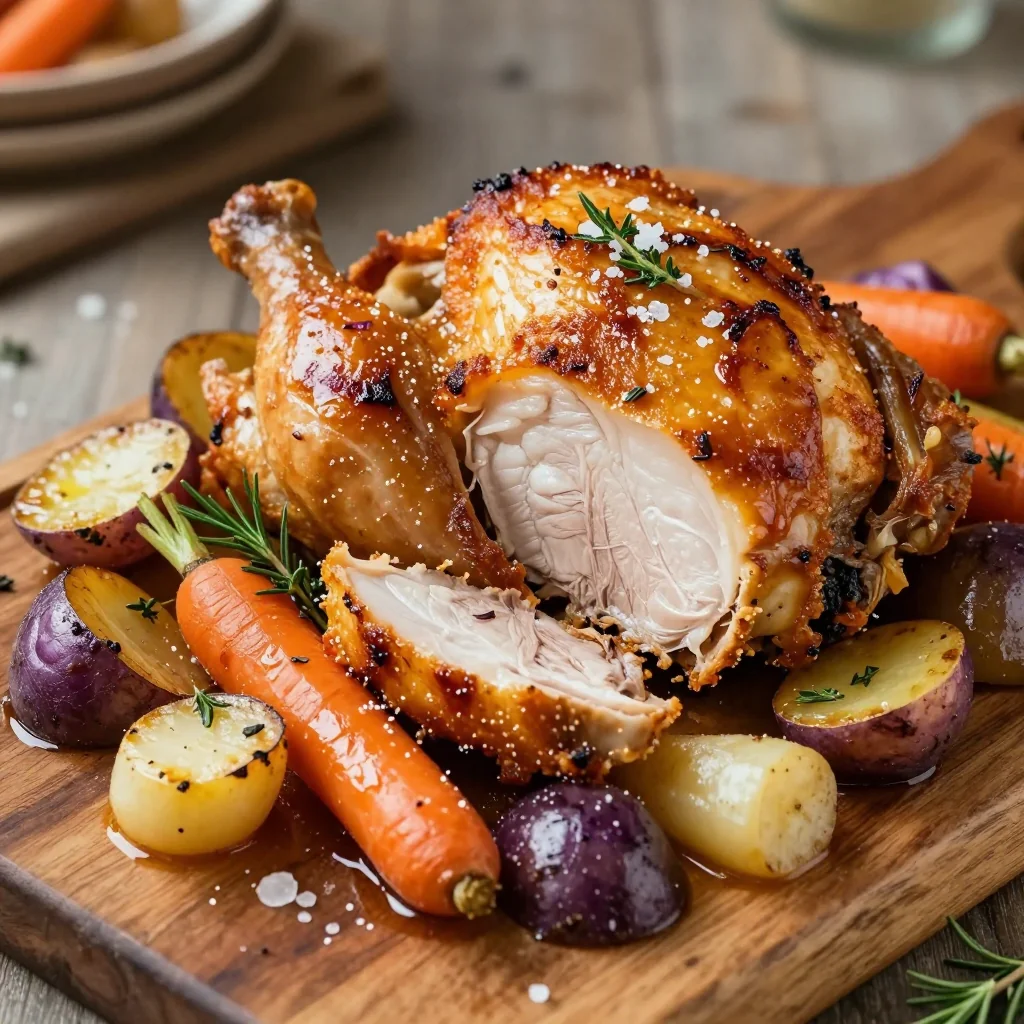
Snip the trussing string, remove stuffing aromatics, and carve the chicken into breasts, thighs, drumsticks, and wings. Arrange on a warm platter surrounded by the roasted vegetables. Spoon a little gravy over the slices and pass the rest at the table. Garnish with additional chopped parsley for color.
Expert Tips
Use a leave-in probe
Insert the probe into the thickest part of the breast before the bird goes into the oven; set the alarm for 160 °F. You’ll never overcook again, and you can mingle instead of hovering.
Dry the vegetables
After peeling, roll carrots and parsnips in a clean kitchen towel; removing surface moisture helps them caramelize rather than steam.
Rotate halfway
Most home ovens have hot spots. Swapping pans top to bottom and rotating front to back ensures vegetables brown evenly and the chicken skin blisters uniformly.
Save the bones
Toss the carcass into a slow-cooker overnight with onion ends and carrot peels for stock. Wake up to liquid gold for tomorrow’s soup.
Variations to Try
- Mediterranean twist: Swap parsley for oregano, add Kalamata olives to the vegetable pan, and finish with a squeeze of orange juice.
- Smoky heat: Add ½ teaspoon smoked paprika and ¼ teaspoon cayenne to the herb butter; include chunks of sweet potato for balance.
- Autumn harvest: Replace parsnips with butternut squash cubes and add fresh sage leaves; drizzle maple syrup over everything during the last 10 minutes.
- Asian fusion: Sub sesame oil for olive oil, use ginger and scallion in the cavity, and glaze with a mixture of soy sauce, honey, and rice vinegar in the final 15 minutes.
Storage Tips
Refrigerate: Cool leftover meat and vegetables within 2 hours. Store in separate airtight containers; chicken keeps up to 4 days, vegetables up to 5. Reheat chicken in a 300 °F oven with a splash of stock to restore moisture; microwave works in a pinch but toughens the skin.
Freeze: Shred meat from the bones and freeze in 2-cup portions with a ladle of gravy; keeps 3 months. Vegetables become mushy when thawed, so it’s best to eat them fresh or repurpose into puréed soup.
Make-ahead: The herb butter can be rolled into a log in plastic wrap and frozen up to 2 months. The vegetables can be peeled and held in cold salted water overnight; drain and pat dry before roasting.
Frequently Asked Questions
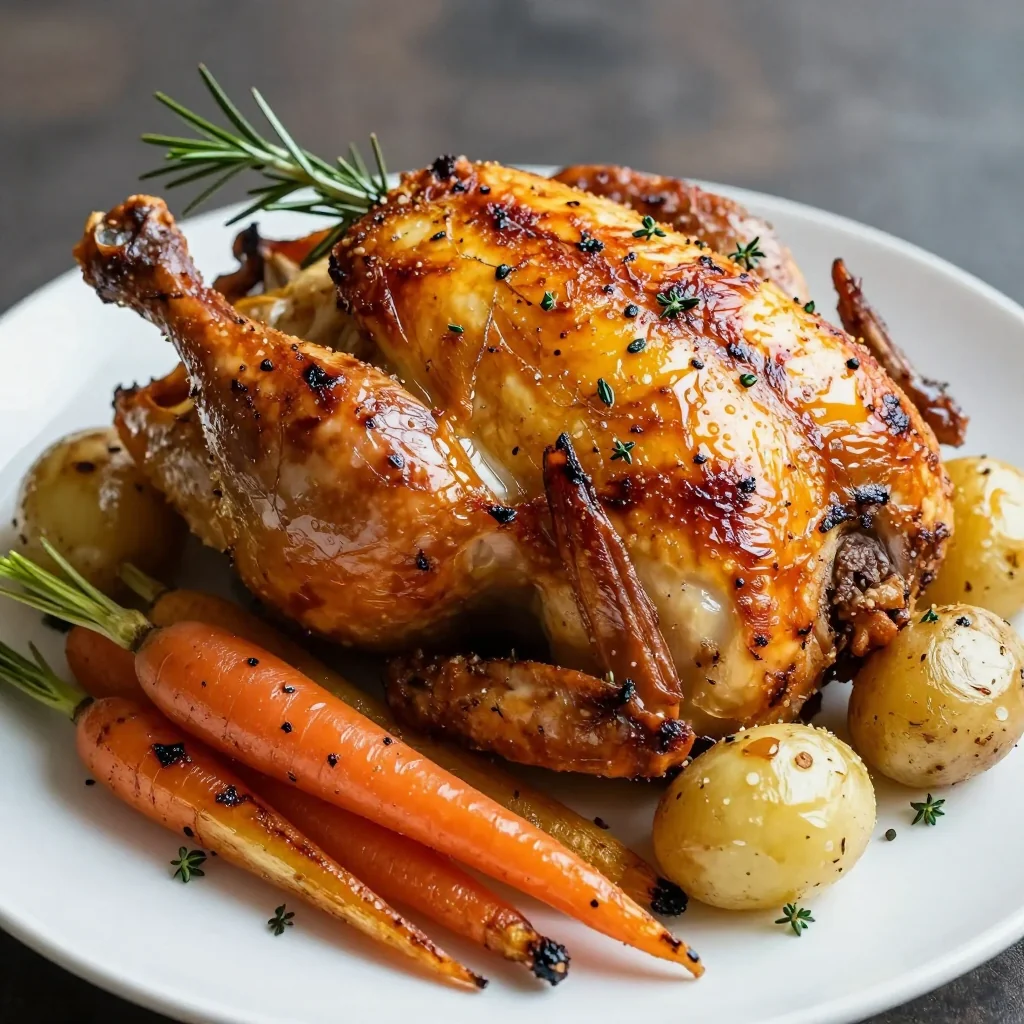
Herb Roasted Chicken and Root Vegetables for Dinner
Ingredients
Instructions
- Dry-brine: Pat chicken dry; mix salt, pepper, baking powder and sprinkle all over. Refrigerate uncovered on a rack 12–48 hours.
- Herb butter: Combine butter, parsley, thyme, rosemary, lemon zest, minced garlic, ½ tsp salt, and a few grinds pepper. Reserve 1 Tbsp for vegetables.
- Season: Loosen skin and spread herb butter underneath. Stuff cavity with onion, lemon halves, and smashed garlic; truss legs.
- Vegetables: Toss carrots, parsnips, potatoes with reserved butter, olive oil, ½ tsp salt, ¼ tsp pepper.
- Roast: Heat oven to 425 °F. Roast chicken 20 min; reduce to 350 °F, add vegetables to lower rack, cook 45–55 min more until breast reads 160 °F.
- Gravy: Remove chicken to rest. Pour stock and wine into hot pan, scrape fond, simmer 3 min, whisk in 1 Tbsp cold butter.
- Serve: Carve chicken, arrange with vegetables, spoon gravy over top. Garnish with parsley.
Recipe Notes
For ultra-crisp skin, let the chicken air-dry in the refrigerator an extra 24 hours. If the vegetables finish first, move them to the top rack to stay warm while the chicken completes roasting.