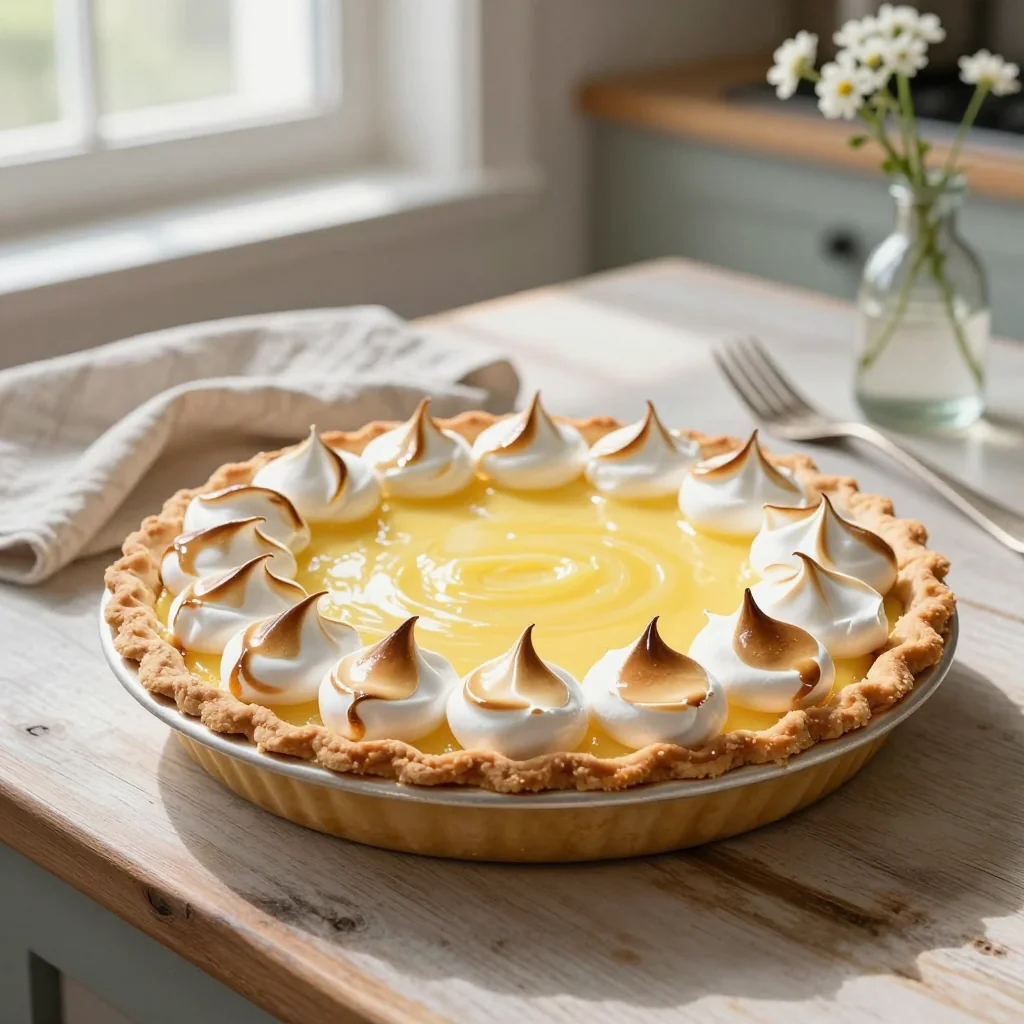
A bright, tangy classic that balances buttery crust with airy, caramel‑kissed meringue.

When I was a child, the scent of fresh lemon zest drifting from the kitchen was the first hint of summer, even if it was a chilly November afternoon. My grandmother would whisk together a glossy lemon curd, fold it into a buttery crust, and crown it with clouds of toasted meringue that seemed to melt on the tongue. The first bite was always a revelation: bright acidity balanced by sweet, airy peaks, all resting on a tender, crumbly base. That memory has followed me through every kitchen I’ve ever worked in, and each time I bake this Lemon Meringue Pie, I feel that same spark of joy.
Originating from the classic French tarte au citron, this pie has traveled across continents, becoming a beloved staple in American home baking. Its timeless appeal lies in the perfect harmony between the crisp, buttery crust and the tangy, velvety lemon filling, finished with a toasted meringue that adds a whisper of caramelized sugar. The recipe I’m sharing today respects tradition while offering modern tips that guarantee a flawless result, even for bakers who may be intimidated by meringue.
In this guide, you’ll learn how to create a homemade pie crust from scratch, master the science of a stable lemon curd, and whip a meringue that stays glossy and firm. I’ll walk you through each step, from gathering the freshest lemons at the market to achieving that perfect golden brown finish under the broiler. By the end, you’ll have a show‑stopping dessert that feels both nostalgic and sophisticated.
Let’s get started—grab your lemons, preheat the oven, and prepare to impress friends and family with a pie that looks as radiant as it tastes.
🌟 Why This Recipe Will Capture Your Heart
This Lemon Meringue Pie isn’t just a dessert; it’s an experience that blends bright citrus with comforting textures.
- ✨ Bright, Refreshing Flavor: The lemon curd delivers a clean, tangy punch that cuts through the sweetness, making each bite feel lively and balanced.
- ✨ Flaky, Buttery Crust: By making the crust from scratch, you achieve a tender, melt‑in‑your‑mouth texture that store‑bought crusts simply can’t match.
- ✨ Light, Airy Meringue: Properly whisked egg whites create a lofty topping that stays crisp on the edges while remaining soft in the center.
- ✨ Visual Impact: The golden‑brown peaks of meringue provide a stunning presentation that looks as impressive as it tastes.
- ✨ Versatile Serving: Serve it warm with a scoop of vanilla ice cream, or chilled for a refreshing summer treat.
- ✨ Crowd‑Pleaser: The combination of sweet and tart satisfies both kids and adults, making it perfect for gatherings.
🥗 Les Ingrédients
📝 Complete Ingredient List
For the Homemade Crust:
- 150 g all‑purpose flour
- 50 g powdered sugar
- 0.25 tsp salt
- 115 g unsalted butter, cold and diced
- 1 egg yolk
For the Lemon Curd Filling:
- 240 ml fresh lemon juice
- 200 g granulated sugar
- 4 large eggs
- 2 large egg yolks
- 60 g unsalted butter, cut into pieces
- 2 tsp lemon zest
For the Meringue Topping:
- 4 large egg whites
- 100 g granulated sugar
- 0.5 tsp cream of tartar
- 1 tsp vanilla extract
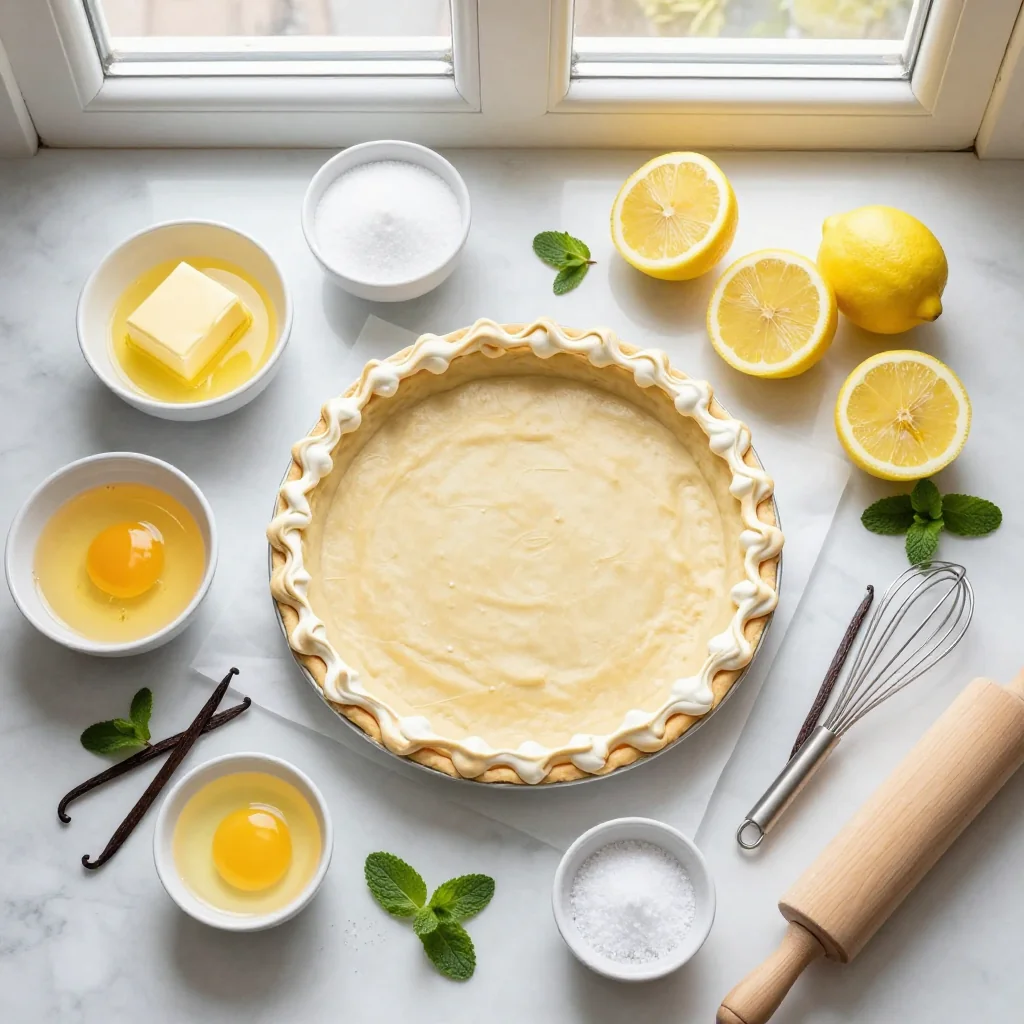
🔍 Focus on Key Ingredients
Lemons
Lemons are the star of this pie. Their bright, acidic juice not only flavors the curd but also reacts with the sugar to create a glossy, stable custard. When selecting lemons, look for bright yellow skins that feel heavy for their size—these will yield the most juice and zest. The zest contains essential oils that intensify the lemon aroma, so always grate the zest before juicing.
Unsalted Butter
Unsalted butter is crucial for both the crust and the curd. It provides a rich, buttery flavor without the interference of added salt, allowing you to control seasoning precisely. Use high‑quality European butter for a slightly higher fat content, which yields a flakier crust and a smoother curd.
Egg Whites
Egg whites give the meringue its airy structure. Fresh, room‑temperature whites whip best, and adding a pinch of cream of tartar stabilizes the foam, preventing it from collapsing during baking. Whisk until stiff peaks form, then gradually incorporate sugar for a glossy finish.
🔄 Quick Substitutions
| If you don’t have... | Use instead... |
|---|---|
| Powdered sugar | Blend granulated sugar in a food processor until fine |
| Lemon juice | Fresh lime juice (adjust sweetness) |
| Unsalted butter | Salted butter (reduce added salt by ¼ tsp) |
👨🍳 Step‑by‑Step Instructions
Follow these detailed steps to achieve a flawless pie, from crust preparation to the final caramelized meringue.
📋 Phase 1: Preparation & Mise en Place
Gather your tools, preheat the oven, and set up a clean workspace.
Prepare the crust
In a large bowl, whisk together flour, powdered sugar, and salt. Add the cold butter pieces and, using a pastry cutter or your fingertips, rub the butter into the dry ingredients until the mixture resembles coarse crumbs with some pea‑sized pieces. Add the egg yolk, mix quickly until the dough just comes together, then form it into a disc, wrap in plastic, and chill for 30 minutes.
Roll out the dough
On a lightly floured surface, roll the chilled dough to a 12‑inch circle about 3‑mm thick. Gently transfer it to a 9‑inch pie pan, pressing it into the edges. Trim any excess dough, then chill the crust in the pan for another 15 minutes while you prepare the filling.
🔥 Phase 2: Baking the Crust & Cooking the Lemon Curd
Create a golden base and a silky lemon curd.
Blind‑bake the crust
Preheat the oven to 190 °C (375 °F). Line the chilled crust with parchment paper, fill with baking beans or rice, and bake for 15 minutes. Remove the paper and beans, then bake another 10 minutes until lightly golden. Let cool completely before adding the filling.
Make the lemon curd
In a saucepan, whisk together lemon juice, sugar, and the eggs (including yolks). Place over medium heat, stirring constantly, until the mixture thickens and coats the back of a spoon (about 8‑10 minutes). Remove from heat, stir in butter pieces until melted, and fold in lemon zest. Strain through a fine‑mesh sieve into a bowl to remove any cooked egg bits.
Cool the curd
Cover the curd with plastic wrap directly on the surface to prevent a skin from forming. Let it cool to room temperature, then refrigerate for at least 30 minutes to set.
✨ Phase 3: Meringue & Final Assembly
Whip the meringue, assemble the pie, and achieve a perfect caramelized top.
Whip the meringue
In a clean, grease‑free bowl, begin beating the egg whites on medium speed. Once foamy, add cream of tartar and continue beating until soft peaks form. Gradually add sugar, a tablespoon at a time, while increasing speed to high. Beat until stiff, glossy peaks appear and the bowl feels clean when lifted.
Assemble the pie
Spread the chilled lemon curd evenly over the baked crust. Spoon the meringue on top, using a spatula to create peaks and swirls. Ensure the meringue completely covers the filling, sealing the edges to prevent shrinking.
Bake the meringue
Place the assembled pie on a baking sheet and bake at 220 °C (425 °F) for 8‑10 minutes, or until the meringue is golden brown and firm to the touch. Keep a close eye; the high heat can quickly go from perfect to burnt.
Cool before serving
Allow the pie to cool on a wire rack for at least 1 hour. This ensures the filling sets and the meringue remains stable when sliced.
💡 Expert Tips & Tricks
🛒 Choosing the Right Ingredients
Pick lemons that feel heavy for their size; they contain more juice and zest. Opt for a high‑fat European butter for a richer crust, and use free‑range eggs for better volume in the meringue. When possible, source organic sugar to avoid any off‑flavors that can arise from processing.
🔪 Preparation Techniques
When cutting butter for the crust, keep it cold. This prevents the butter from melting into the flour, which would result in a dense crust. Use a food processor for the crust if you prefer a uniform texture, but be careful not to over‑process; a few visible butter chunks are ideal.
🌡️ Mastering the Cooking Process
Maintain a steady oven temperature when baking the curd—fluctuations can cause curdling. For the meringue, a quick blast of high heat creates those coveted caramelized peaks without drying out the interior.
🍽️ Presentation & Service
Serve each slice with a dollop of lightly sweetened whipped cream or a scoop of vanilla bean ice cream. A light dusting of powdered sugar adds elegance, and a few fresh mint leaves bring a pop of color.
🏆 Pro Tips
Professional bakers rely on precision and timing to achieve flawless results.
- 🎯 Keep the crust chilled: A cold crust expands less during baking, preserving its shape and ensuring a flaky texture.
- 🎯 Use a water bath for the curd: Placing the saucepan in a simmering water bath (bain‑marie) provides gentle, even heat, preventing the eggs from scrambling.
- 🎯 Stabilize meringue with acid: Adding a pinch of cream of tartar or a few drops of lemon juice strengthens the protein network, giving a more stable peak.
- 🎯 Avoid over‑whipping egg whites: Once stiff peaks form, stop whisking; over‑whipping leads to a dry, grainy meringue that cracks.
- 🎯 Finish under the broiler for a perfect finish: A brief broil at the end creates an even, caramelized top without drying the interior.
- 🎯 Rest the pie before slicing: Allowing the pie to set for an hour after baking gives the filling time to firm up, resulting in clean, neat slices.
"A perfect meringue is like a cloud—light, airy, and impossible to ignore." — Thomas Keller
🔄 Variations & Adaptations
While the classic lemon meringue pie is timeless, you can tailor it to suit dietary preferences or explore new flavor profiles.
🥬 Vegan Version
Replace dairy butter with a plant‑based margarine, use aquafaba (the liquid from canned chickpeas) instead of egg whites, and substitute the curd with a coconut‑milk based lemon custard thickened with agar‑agar.
- Vegan butter (use the same weight as dairy butter for the crust).
- Aquafaba whipped with cream of tartar (approximately ¾ cup for 4 egg whites).
- Coconut milk curd (use full‑fat coconut milk, lemon juice, sugar, and agar‑agar).
🌶️ Flavor Variations
Play with complementary flavors to give the pie a unique twist.
Spiced Citrus Version
Add a pinch of ground cardamom and a dash of ginger powder to the lemon curd for a warm, aromatic finish.
Berry‑Infused Version
Fold a handful of fresh raspberries or blueberries into the curd before spreading it into the crust. The berries add a subtle tartness and a burst of color.
Herb‑Infused Version
Steep a few sprigs of fresh thyme in the lemon juice before making the curd. The herbaceous note pairs beautifully with the citrus.
⚠️ Dietary Adaptations
Gluten‑Free
Swap all‑purpose flour for a 1‑to‑1 gluten‑free blend, and add a tablespoon of xanthan gum to improve structure.
Lactose‑Free
Use lactose‑free butter or a high‑quality coconut oil for the crust, and replace regular butter in the curd with lactose‑free margarine.
Low‑Calorie
Reduce sugar in the curd by 25 % and use a sugar substitute like erythritol. Replace part of the butter in the crust with a light olive oil to cut calories without sacrificing texture.
👶 Family‑Friendly Version
For kids, reduce the amount of lemon juice slightly and add a swirl of strawberry jam on top of the meringue. Serve with a side of vanilla yogurt for a creamy contrast.
📦 Storage & Reheating
🧊 Storage (Cold)
Refrigerator
- Duration: 3‑4 days
- Container: Airtight pie dish or covered with plastic wrap
- Tip: Place a sheet of parchment between the meringue and the lid to avoid condensation.
Freezer
- Duration: Up to 2 months
- Method: Freeze the fully assembled pie (uncooked meringue) on a baking sheet, then transfer to a freezer‑safe container.
- Defrost: Thaw overnight in the refrigerator, then bake as directed.
💡 For best texture, bake the meringue fresh after thawing; frozen meringue can become soggy.
♨️ Reheating
Oven (Recommended)
- Preheat to 180 °C (350 °F).
- Cover the pie loosely with foil to protect the meringue.
- Heat for 10‑12 minutes until the filling is warmed through.
- Remove foil and bake an additional 3‑4 minutes to crisp the meringue.
Microwave (Quick)
- Place a slice on a microwave‑safe plate.
- Cover with a microwave‑safe lid.
- Heat on medium power for 30‑45 seconds.
- Check and repeat in 10‑second intervals if needed.
Stovetop (Optional)
If you prefer a quick warm‑up, place a slice in a non‑stick skillet over low heat, covering with a lid for 2‑3 minutes. This method revives the crust without drying the meringue.
🍷 Perfect Pairings
🥗 Side Dishes
- Mixed Green Salad with Citrus Vinaigrette: The bright vinaigrette echoes the lemon flavor while adding a fresh crunch.
- Lightly Roasted Asparagus: Its earthy notes balance the pie’s sweetness.
- Fresh Berries with Mint: A simple bowl of berries adds color and a complementary tartness.
🍷 Wine & Beverage Pairings
- Sauvignon Blanc: Its crisp acidity mirrors the lemon curd, enhancing the citrus profile.
- Moscato d'Asti: Lightly sparkling and sweet, it pairs beautifully with the meringue’s caramel notes.
- Non‑Alcoholic Option – Sparkling Lemonade: A homemade sparkling lemonade keeps the citrus theme alive without alcohol.
🍰 Complementary Courses
Start with a light starter such as a chilled cucumber gazpacho, follow with the lemon meringue pie, and finish with a palate‑cleansing sorbet—perhaps a raspberry or lime sorbet—to keep the flavors bright and refreshing.
❓ Frequently Asked Questions
Q: Can I make the crust ahead of time?
A: Absolutely. Prepare the crust, chill it, and store it wrapped in plastic for up to 2 days. When you’re ready, bake it as directed. This saves time on the day you plan to serve the pie.
Q: How do I know when the lemon curd is thick enough?
A: The curd should coat the back of a spoon and leave a clear line when you run your finger through it. If it’s still runny, continue cooking a minute or two while stirring constantly.
Q: My meringue collapsed—what went wrong?
A: Common reasons include under‑whipping the egg whites, adding sugar too quickly, or exposing the meringue to humidity. Ensure the bowl is clean, whisk until stiff peaks form, and add sugar gradually while the mixer is on high speed.
Q: Can I use a glass pie dish instead of metal?
A: Yes, a glass dish works well. Just be aware that glass retains heat longer, so you may need to reduce the baking time for the crust by a couple of minutes.
Q: How can I make the pie lower in sugar?
A: Reduce the sugar in the curd by 20‑25 % and use a sugar substitute like erythritol for the meringue. The meringue will still achieve a glossy finish, though it may be slightly less sweet.
Q: Is it possible to freeze the meringue topping?
A: Freezing meringue can cause it to become soggy when thawed. For best results, bake the meringue fresh. If you must freeze, do so before baking and bake directly from frozen, extending the bake time by 2‑3 minutes.
🎉 To Your Oven!
This Lemon Meringue Pie is more than a dessert; it’s a celebration of texture, flavor, and technique. From the buttery crust to the silky lemon curd and the airy, caramelized meringue, each component works together to create a harmonious bite. Whether you’re serving it at a holiday gathering or enjoying a quiet afternoon treat, the pie’s bright citrus notes and delicate sweetness will leave a lasting impression.
Remember, the key to success lies in patience—chill the crust, watch the curd closely, and keep an eye on the meringue as it browns. With the tips, variations, and troubleshooting advice provided, you’re fully equipped to master this classic and make it your own.
Have you tried this recipe? Share your results, ask any lingering questions, and rate the recipe below. I love seeing your photos and hearing how you’ve personalized the pie—tag your creations with #LemonMeringueMagic for a chance to be featured!
Did you try this recipe?
Leave a comment and rating below! Share your photos on Instagram with #LemonMeringueMagic to be highlighted on our blog.
Lemon Meringue Pie with Homemade Pie Crust
A bright, tangy classic that balances buttery crust with airy, caramel‑kissed meringue.
📝 Ingredients
Crust
Lemon Curd
Meringue
👨🍳 Instructions
- 1
Prepare the crust by mixing flour, powdered sugar, and salt; incorporate cold butter, then add the egg yolk.
- 2
Roll the dough, fit it into a 9‑inch pie pan, chill, then blind‑bake for 15 minutes.
- 3
Blind‑bake the crust, remove beans, and bake until lightly golden.
- 4
Prepare the lemon curd by whisking lemon juice, sugar, and eggs; cook gently until thick.
- 5
Stir in butter and zest, then chill the curd.
- 6
Whip the egg whites with cream of tartar, then gradually add sugar until stiff peaks form.
- 7
Spread the curd in the crust and top with meringue, creating peaks.
- 8
Bake at 220 °C (425 °F) for 8‑10 minutes until the meringue is golden.
- 9
Cool the pie on a rack for at least 1 hour before slicing.
- 10
Serve with a scoop of vanilla ice cream or a dollop of whipped cream.
🥗 Nutrition Information (per serving)
*Nutritional values are estimates and may vary based on ingredient brands.
📚 You Might Also Like
Chocolate Hazelnut Tart
Raspberry Tart with Almond Crust
Classic Chocolate Mousse
Mixed Berry Tart
💬 Comments & Reviews
[Space for reader comments]




Leave a Comment