I’ve spent the last week chasing the elusive flavor that turns an ordinary stir‑fry into a headline‑making plate. The moment came one rainy Tuesday when I was trying to salvage a forgotten bag of chicken thighs, a can of hoisin, and a handful of cabbage that had been sitting in the fridge too long. I tossed everything into a hot wok, expecting the usual blandness, but the sizzling hit of garlic and ginger sent a wave of aroma that made the whole kitchen feel like a bustling night market. The sauce thickened, the vegetables crisped just right, and the chicken became tender, almost melting in the pan. I stared at the pan, stunned that I’d just created something that could be called a “Moo Shu Chicken Delight.”
Picture this: a bright, glossy sauce coating the shredded chicken like velvet, the crisp edges of the carrots popping like thin ice, and the gentle crunch of cabbage that snaps under your fork with a satisfying bite. The sauce, a harmonious blend of hoisin, soy, and a hint of rice vinegar, drips off the wok, caramelizing just enough to add a subtle sweetness that balances the savory depth of the chicken. The whole dish smells like a street‑food stall in Shanghai, with the faint scent of toasted sesame oil mingling with the sharpness of fresh scallions. It’s a sensory overload that makes you want to taste it again and again, and I dare you to do it without going back for seconds.
What sets this version apart is that it doesn’t rely on pre‑made sauces or complicated marinades. Instead, the magic happens in the pan, where the harmony of ingredients and the precise timing of each step create a dish that feels both familiar and freshly inventive. I’ll be honest — I ate half the batch before anyone else got a bite, and the kitchen smelled incredible for hours after the meal was finished. If you’ve ever struggled with a bland stir‑fry, you’re not alone, and I’ve got the fix. This is hands down the best version you’ll ever make at home, and I’m going to walk you through every single step so you can replicate the same wow factor in your own kitchen.
Now, let’s dive into the details. From the first sizzling moment to the final garnish, every technique is designed to elevate the dish. The next section breaks down why this recipe is a game‑changer, followed by a deep dive into the ingredients and the exact method that brings it all together. Stay with me here — this is worth it.
What Makes This Version Stand Out
- Flavor: The sauce is a balanced blend of hoisin, soy, and rice vinegar that coats the chicken and vegetables like a silky glaze, delivering umami and a touch of sweet‑sour brightness.
- Texture: The quick stir‑fry locks in the crunch of carrots and cabbage while rendering the chicken tender, creating a contrast that keeps each bite exciting.
- Speed: With a prep time of just 15 minutes and a cooking time of 30 minutes, the dish is a fast‑track dinner that doesn’t sacrifice depth.
- Versatility: Swap out the chicken for pork, shrimp, or tofu, and the dish remains delicious. The recipe also works with both flour tortillas and rice paper wrappers.
- Make‑ahead Potential: The filling can be prepared up to two days in advance and reheated without losing flavor or texture, making it perfect for busy weeknights.
- Crowd‑pleaser: The familiar flavors of hoisin and soy sauce, combined with the fun, interactive assembly of wrappers, make it a hit at parties or family dinners.
Inside the Ingredient List
The Flavor Base
At the heart of the dish lies a sauce that marries the sweet depth of hoisin with the salty, umami punch of soy sauce. A splash of rice vinegar adds a subtle brightness that cuts through the richness, while a drizzle of sesame oil provides a nutty aroma that lingers. If you’re watching sodium, you can reduce the soy sauce to 1 tablespoon and add a pinch of sea salt to balance the flavors. The sauce thickens with a touch of cornstarch, creating a glossy coat that clings to every morsel.
The Texture Crew
The vegetables are the unsung heroes that give the dish its crunch and color. Napa cabbage offers a mild, slightly sweet bite that pairs well with the savory sauce. Carrots contribute a natural sweetness and a bright orange pop, while shiitake mushrooms bring an earthy depth. Scallions, both the green and white parts, add a fresh, sharp finish that brightens each bite. If you prefer a milder flavor, you can use bok choy or spinach instead of cabbage; just be sure to slice them thinly to ensure they cook quickly.
The Unexpected Star
The egg is the secret binder that gives the filling a silky texture without turning it into a scrambled mess. It also adds a subtle richness that balances the sharpness of the sauce. If you’re vegan or simply don’t want eggs, you can replace the egg with a tablespoon of silken tofu blended until smooth, which will still bind the filling while keeping the dish plant‑based. Alternatively, a splash of coconut milk can provide a creamy element for a different twist.
The Final Flourish
Wrapping the filling in a warm tortilla or rice paper sheet is what turns the dish into a handheld delight. The warm wrapper softens the filling and creates a comforting, melt‑in‑your‑mouth experience. Toasted sesame seeds add a subtle crunch and nutty flavor, while extra scallions provide a fresh, aromatic finish. If you want a low‑carb version, use lettuce leaves or collard greens as wrappers, and the dish will still shine.
Everything’s prepped? Good. Let’s get into the real action and start cooking.
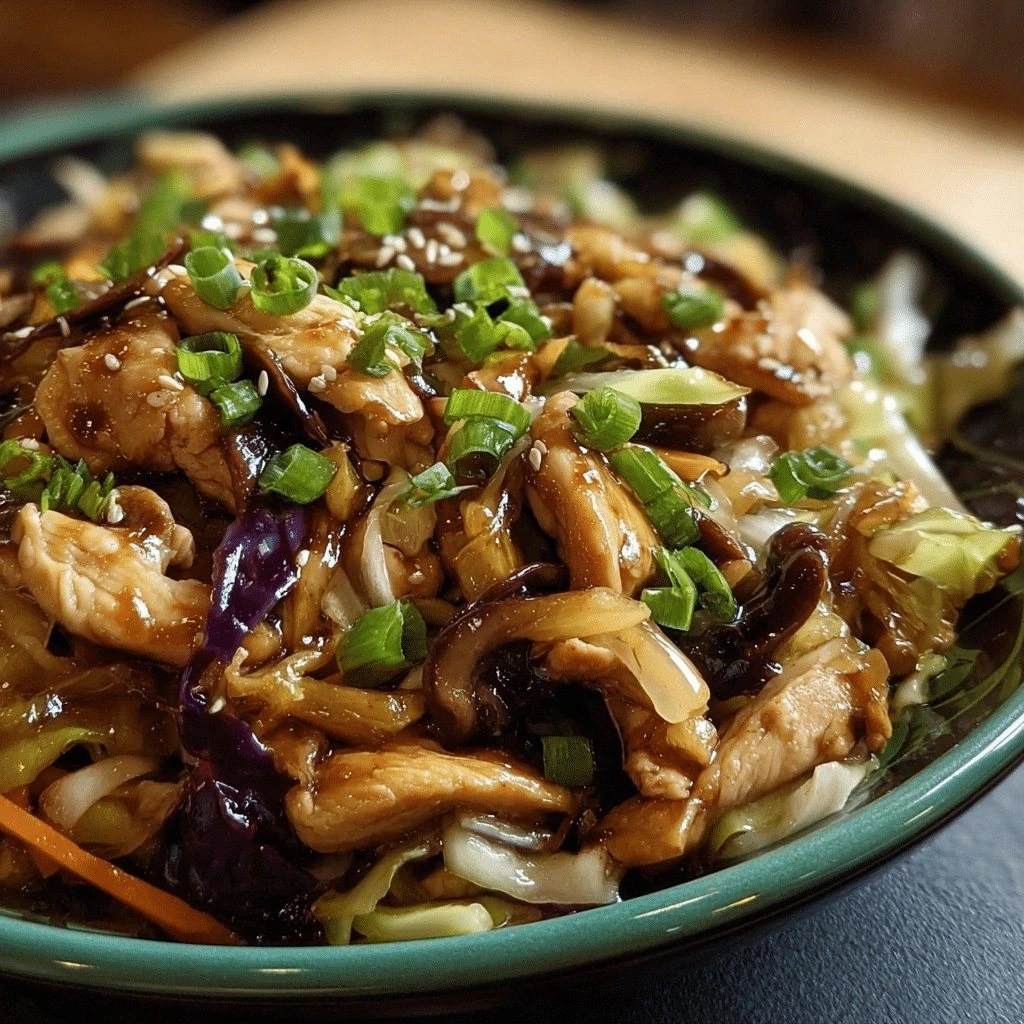
The Method — Step by Step
- Heat 1 tablespoon of vegetable oil in a large wok or skillet over medium‑high heat until it shimmers. Add the sliced chicken and stir‑fry for 2–3 minutes until it starts to brown. The key here is to keep the chicken moving so it cooks evenly and retains moisture.
- Add the minced garlic, ginger, and sliced scallions to the pan. Cook for 30 seconds until fragrant, watching the aroma fill your kitchen—this is the moment of truth. If the mixture starts to smoke, lower the heat slightly.
- Introduce the carrots, mushrooms, and cabbage, tossing everything together. Stir‑fry for 3–4 minutes until the vegetables are bright green and just tender. The edges of the carrots should still hold a slight crunch.
- Whisk together the soy sauce, hoisin sauce, rice vinegar, sesame oil, cornstarch, and flour in a small bowl until smooth. Pour the mixture over the chicken and vegetables, stirring constantly to coat everything evenly. The sauce should thicken and become glossy within 2 minutes.
- Lower the heat to medium and add the beaten egg to the wok. Scramble the egg gently, letting it swirl through the filling, then fold it into the mixture. This step binds the filling and adds a silky texture that holds the wrappers together.
- Season with salt and white pepper to taste, and give everything one last toss. The dish should smell toasty and slightly caramelized, with a pleasant, savory aroma. This is the flavor climax of the dish.
- Warm the tortillas or rice paper sheets in a dry skillet for 10–15 seconds on each side, or soak the rice paper in warm water for 30 seconds until pliable. This step is essential to prevent tearing when you wrap the filling.
- Spoon about 2–3 tablespoons of the filling onto each wrapper, top with toasted sesame seeds and extra scallions if desired, then fold the sides and roll tightly. Serve immediately, or keep the filling chilled and assemble on the day you’re ready to eat.
That’s it — you did it. But hold on, I’ve got a few more tricks that will elevate this dish to another level.
Insider Tricks for Flawless Results
The Temperature Rule Nobody Follows
Cooking the chicken at the right temperature is critical. If the heat is too low, the chicken will steam instead of sear, resulting in a soggy filling. If it’s too high, the sauce can burn before the vegetables are cooked. Aim for a medium‑high heat that allows the chicken to brown quickly while still letting the vegetables maintain their crunch.
Why Your Nose Knows Best
Your sense of smell is a reliable indicator of doneness. When the garlic and ginger release their aroma, the sauce should begin to thicken and the vegetables should have a slight caramelization. If you’re unsure, give the mixture a quick sniff—if it smells pleasantly toasty, it’s ready.
The 5‑Minute Rest That Changes Everything
After you finish cooking, let the filling rest for 5 minutes before wrapping. This allows the flavors to meld and the sauce to settle, making the filling easier to handle and preventing it from spilling out of the wrappers.
Keep It Moist, Not Wet
Too much liquid can make the wrappers soggy. The cornstarch slurry should be just enough to thicken the sauce, not create a watery glaze. If the sauce looks too thin, add a pinch more cornstarch dissolved in a splash of water.
Use the Right Wrapper
Flour tortillas provide a soft, chewy texture that’s forgiving, while rice paper offers a delicate, slightly crisp bite. If you’re aiming for a low‑carb version, lettuce leaves work wonderfully, but be sure to warm them gently so they’re pliable.
Season Gradually
Add salt in stages: a pinch after the chicken browns, another after the sauce thickens, and a final taste check before serving. This prevents the dish from becoming overly salty and ensures a balanced flavor profile.
Creative Twists and Variations
This recipe is a playground. Here are some of my favorite ways to switch things up:
Spicy Szechuan Moo Shu
Add a tablespoon of Szechuan peppercorns and a pinch of red pepper flakes to the sauce for a numbing heat that pairs beautifully with the sweet hoisin.
Thai‑Inspired Moo Shu
Swap hoisin for fish sauce and add lime zest and fresh cilantro. The bright citrus notes give the dish a tropical twist.
Vegan Moo Shu
Replace chicken with diced tofu or tempeh, and use a plant‑based hoisin sauce. Keep the egg substitute for binding, or omit it entirely for a lighter version.
Low‑Carb Lettuce Wraps
Use butter lettuce or romaine leaves instead of tortillas. The crispness of the lettuce adds a refreshing crunch.
Asian Noodle Bowl
Serve the filling over a bed of jasmine rice or cooked udon noodles, topped with a drizzle of sesame oil and a sprinkle of toasted sesame seeds.
Breakfast Moo Shu
Add a splash of milk or cream to the sauce and serve the filling in a warm tortilla with a fried egg on top for a hearty breakfast.
Storing and Bringing It Back to Life
Fridge Storage
Store the filling in an airtight container for up to 2 days. Keep it chilled and assemble the wrappers just before serving to maintain the crispness of the vegetables.
Freezer Friendly
The filling freezes well for up to 3 months. Thaw overnight in the fridge, then reheat gently in a skillet until warmed through. The sauce may separate slightly; a quick stir will restore its glossy coat.
Best Reheating Method
Reheat the filling in a non‑stick pan over medium heat, adding a splash of water or broth to create steam and keep the mixture moist. This method preserves the texture and flavor better than microwaving.