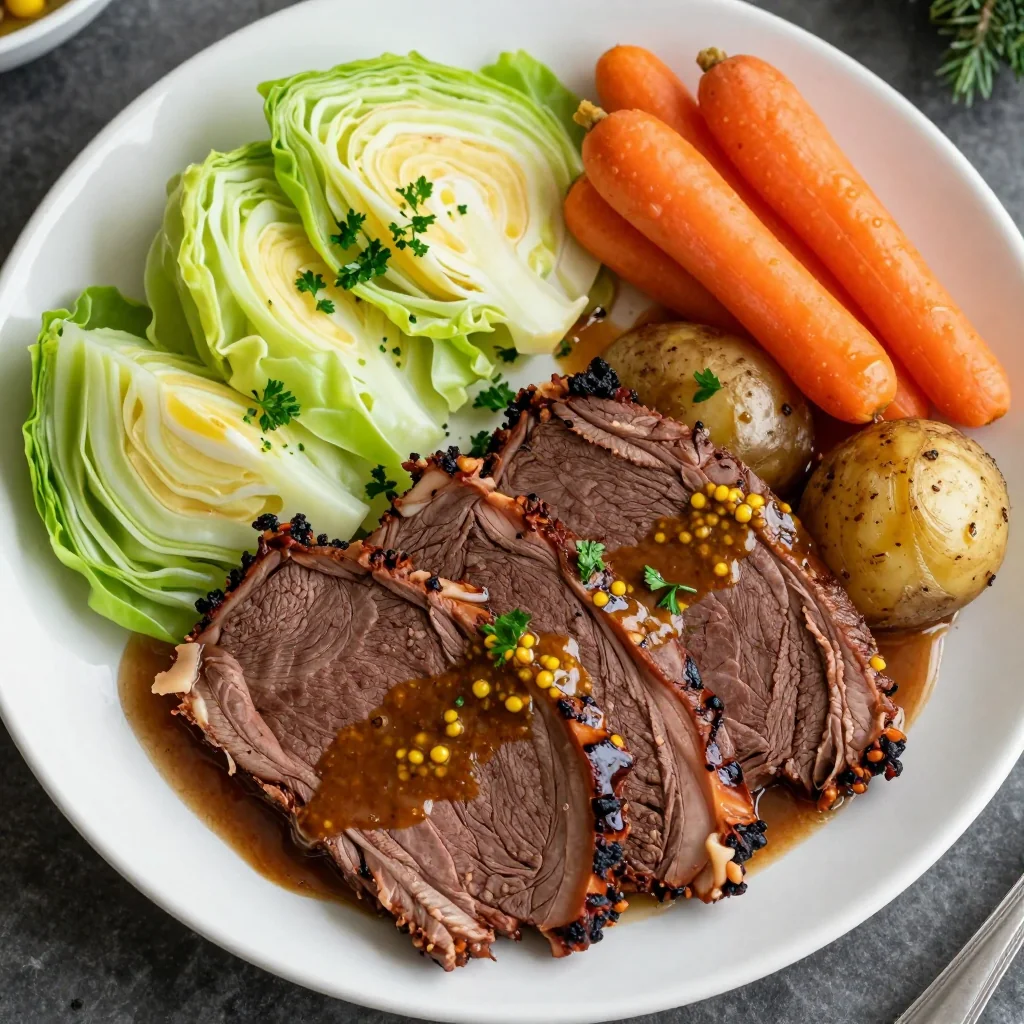
Love this? Pin it for later! 📌
There’s something magical about the first meal of the year bubbling away on the stove while the house still smells of pine needles and fireworks. In my family, the scent of coriander-spiced brine and slow-simmered brisket drifting through the kitchen at 7 a.m. on January 1st is as non-negotiable as the midnight countdown itself. My grandmother started the tradition when she emigrated from Cork in 1952, insisting that the salted beef brought good luck because it “kept” through the winter, while the green leaves folded like paper money—an edible promise of prosperity.
Every New Year’s morning I still use her dented, 12-quart speckled stockpot—its lid rattling like a tambourine once the heat rises—because the ritual feels bigger than any single recipe. The brisket goes in first, bathing in the pickling spices she taught me to toast whole (the cloves plump like tiny balloons), then the potatoes, carrots and finally the cabbage wedges that bob like emerald boats. By the time the neighbors come over for an early brunch, the broth has turned into liquid gold, and the meat slices into petals so tender you barely need a knife. If you’ve never cooked corned beef from scratch for New Year’s, prepare for a revelation: the store-bought greyish slabs you’ve tolerated transform into a blushing, rose-hued centerpiece that tastes of winter warmth and centuries of celebration.
Why This Recipe Works
- Long, Gentle Simmer: A low, lazy bubble dissolves collagen into silk without drying the lean eye of the brisket.
- Whole Spice Blend: Toasting and cracking peppercorns, coriander and mustard seeds releases volatile oils for deeper flavor than any packet.
- Layered Vegetable Timing: Root veggies simmer first; delicate cabbage joins only for the final 15 minutes so it stays bright, not sulfurous.
- Overnight Rest: Letting the brisket cool in its broth rehydrates fibers and makes carving against the grain effortless.
- Two-Sauce Finish: Grainy mustard-horseradish cream and a parsley-shallot vinaigrevitte cut the richness and elevate every bite.
- Lucky Leftovers: Plan for extra; tomorrow’s hash or Reuben sandwiches taste even better when the beef has overnighted in its aromatic bath.
Ingredients You'll Need
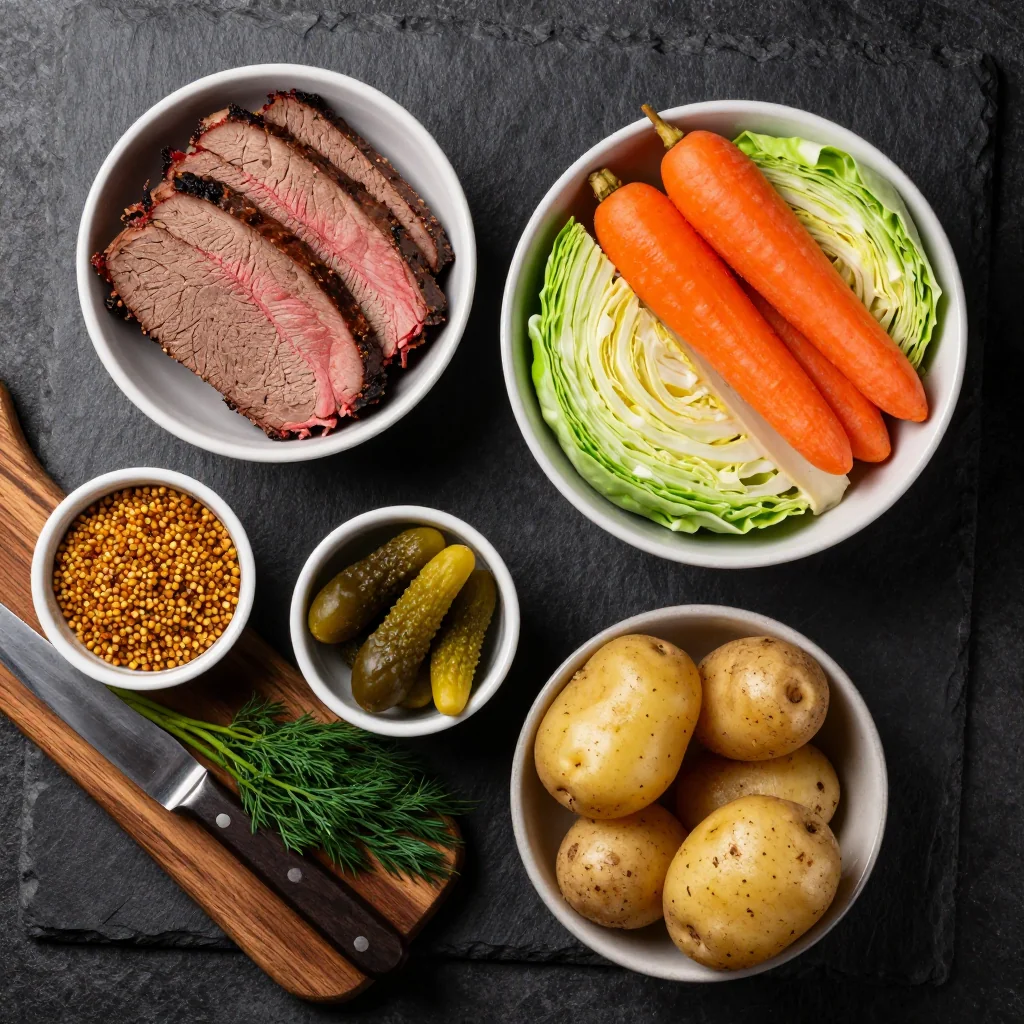
A great corned beef feast begins with shopping intentionally. Look for a flat-cut brisket (often labeled “first cut”) roughly 4–5 lb; it’s more uniform than the point, so slices fan out like a deck of cards. If you can, buy it already cured in a vacuum pack of brine—you’ll save three days of home curing without sacrificing flavor. Inspect the fat cap: a ¼-inch layer is insurance against dryness, but thicker needs trimming.
The spice mix is where personality shines. Whole black peppercorns and coriander seeds are mandatory; toast them in a dry skillet until they pop like sesame seeds, then give one good thwack with a cast-iron pan to fracture—don’t grind to dust. Add yellow mustard seeds, a few allspice berries, two crumbled bay leaves, and a pinch of dried chile for gentle heat. Skip the premixed packet if it lists “spices” without specifics—you deserve transparency.
For vegetables, choose baby red or new potatoes no larger than a golf ball; they hold shape and absorb broth. Seek rainbow carrots for color—peel just the thinnest layer so their skins stay vibrant. A firm green cabbage (about 2 lb) with tight, squeaky leaves is freshest; savoy is lovely but wilts faster. Finish with a fistful of fresh parsley and chives for a verdant sprinkle that photographs like confetti.
How to Make New Year's Day Corned Beef and Cabbage for a Traditional Feast
Brisket Unpack & Rinse
Remove brisket from its packaging; discard the brine if overly salty (taste a drop). Rinse under cold water to remove surface salt, then pat dry. This prevents an over-seasoned pot likker later.
Toast & Crack Spices
In a medium skillet, combine 1 Tbsp black peppercorns, 1 Tbsp coriander seeds, 1 tsp mustard seeds, 4 allspice berries, and 2 crumbled bay leaves. Toast 2 minutes over medium until fragrant; transfer to a cutting board and lightly crush with the bottom of a heavy pan. Reserve 1 tsp for finishing sauce.
Build the Braising Liquor
Place brisket fat-side up in your largest pot. Add crushed spices, 1 quartered onion, 2 smashed garlic cloves, and 8 cups cold water (or half water, half low-sodium chicken stock for deeper body). Liquid should just cover the meat; add more if not. Bring to a bare simmer—never a rolling boil—then reduce to the gentlest bubble. Skim gray foam during first 15 minutes for clearer broth.
Low & Slow First Cook
Cover pot with lid slightly ajar. Simmer 2½–3 hours, adjusting heat as needed to maintain a lazy bubble. Flip brisket halfway so both sides bathe evenly. If liquid reduces below two-thirds, add hot water to original level.
Root Vegetables In
Scrub 1½ lb baby potatoes and peel 4 medium carrots; cut carrots into 2-inch batons. Add to pot, nestling around brisket. Continue simmering 25 minutes until potatoes yield to a knife tip but remain firm.
Cabbage Finale
Core 1 medium cabbage; cut into 6–8 wedges, keeping stem intact to prevent disintegration. Add to pot, pressing gently to submerge. Simmer 12–15 minutes until just tender and color brightens. Overcooking turns cabbage sulfurous and grey.
Rest & Reabsorb
Turn off heat and let everything cool 30 minutes in broth. Meat reabsorbs juices, vegetables marry flavors, and you gain precious time to set the table or whip up sauces.
Slice Against the Grain
Transfer brisket to a board; trim fat if desired. Locate the grain (lines running lengthwise) and, with a sharp slicing knife, cut across into ¼-inch slices for fork-tender bites. Return slices to warm broth briefly before plating.
Expert Tips
Don’t Boil, Don’t Rush
Hard boil tightens muscle fibers and yields rubbery beef. Patience equals silk.
Skim for Clarity
A ladle or fine mesh skimmer removes albumin scum in first 20 minutes, giving crystal broth.
Flip Midway
Turning the brisket halfway equalizes seasoning and prevents one side from drying.
Check Temp, Not Time
Brisket is done at 195 °F internal; collagen melts, but carry-over heat won’t dry it.
Color-Saver Shock
If serving later, transfer cabbage to ice water for 30 seconds to lock in emerald hue.
Save the Pot Likker
Strain and freeze the broth for soup bases; it’s liquid gold packed with umami.
Variations to Try
- Smoked Corned Beef: After simmering, brush with mustard-brown sugar glaze and smoke 45 minutes at 250 °F for a BBQ kiss.
- Beer Broth: Replace 2 cups water with malty stout for deeper caramel notes.
- Root Veg Swap: Swap potatoes for parsnips and carrots for rainbow beets—just stagger timing so beets don’t bleed onto cabbage.
- Low-Carb Plate: Skip potatoes and add quartered daikon radish; texture is eerily similar.
- Vegan “Luck” Option: Use jackfruit and mushrooms braised in seaweed-rich broth with smoked paprika; follow same vegetable timing.
- Spicy Southern Twist: Add 1 tsp red-pepper flakes and finish with hot-honey drizzle for a Kentucky-Louisville mash-up.
Storage Tips
Refrigerate: Cool meat and vegetables separately in their broth within 2 hours. Store in shallow airtight containers up to 4 days. Keeping slices submerged prevents oxidized grey edges.
Freeze: Slice brisket; wrap tightly in plastic, then foil, and freeze up to 3 months. Freeze strained broth in 1-cup muffin trays, then pop out into freezer bags for easy portions. Vegetables become mushy when thawed, so consume those sooner or freeze only potatoes.
Reheat: Warm slices gently in simmering broth over medium-low just until heated through, 5–6 minutes. Microwave works in a pinch, but cover with damp paper towel to avoid jerky edges.
Make-Ahead: Brisket can be cooked entirely 2 days ahead; flavor improves overnight. Reheat as above, then add freshly simmered cabbage for bright color.
Frequently Asked Questions
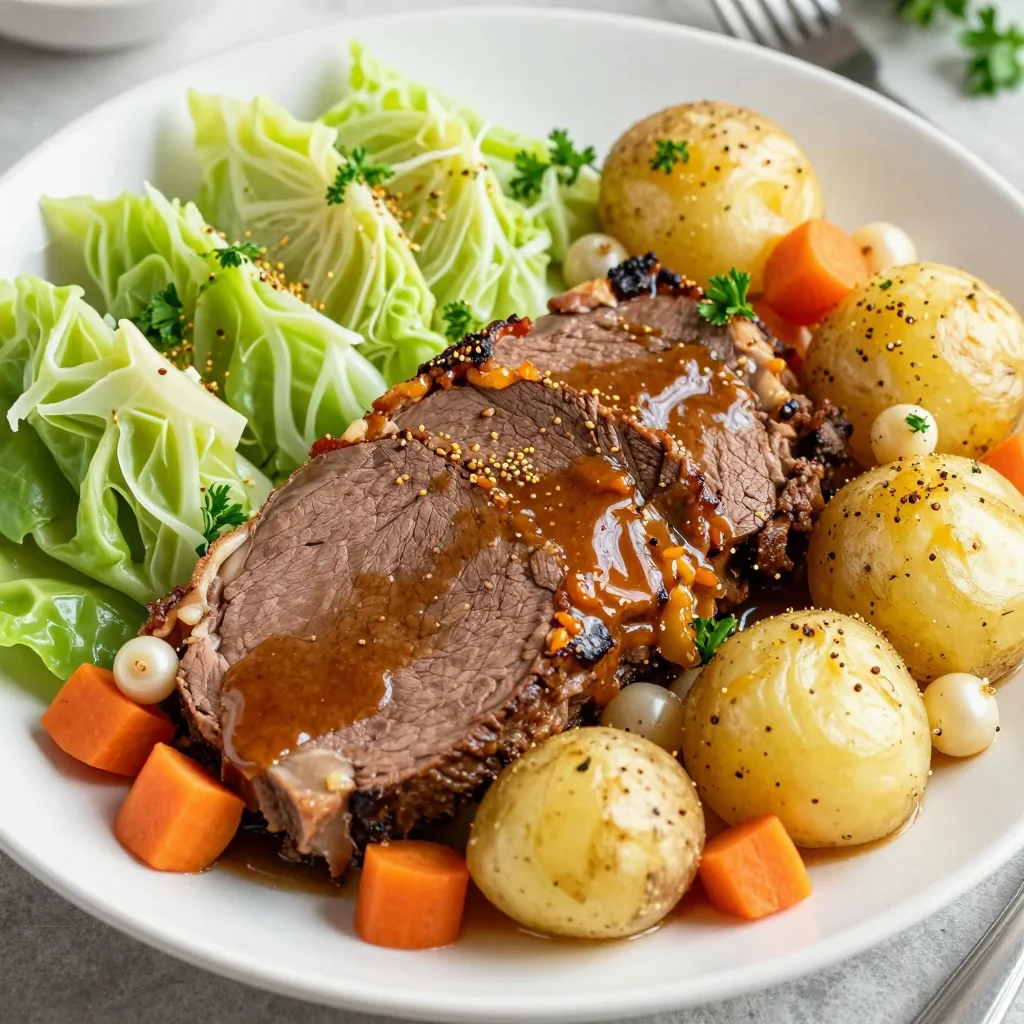
New Year's Day Corned Beef and Cabbage for a Traditional Feast
Ingredients
Instructions
- Rinse & Prep: Rinse brisket; pat dry. Toast spices 2 min; lightly crush.
- Simmer: Place brisket fat-up in pot with spices, onion, garlic, and liquid. Bring to gentle simmer, skimming foam. Cover partially; cook 2½ hr.
- Add Veggies: Add potatoes & carrots; cook 25 min.
- Cabbage: Add cabbage wedges; simmer 12–15 min.
- Rest: Cool 30 min in broth. Slice brisket against grain; return to broth to rewarm.
- Serve: Arrange slices, potatoes, carrots, cabbage in shallow bowls; ladle broth and sprinkle herbs.
Recipe Notes
Brisket can be cooked 2 days ahead; flavor improves overnight. Freeze sliced meat in broth for up to 3 months. Reheat gently to avoid dry edges.