I was halfway through a pumpkin‑scented kitchen disaster when my friend dared me to whip up a cheesecake that would outshine the last one I made. The batter had gone mushy, the crust was a soggy mess, and the pumpkin puree had been over‑cooked into a watery mess. I stared at the mess, laughed, and thought, “If this is the best pumpkin dessert I’ve ever made, I’ll have to keep it secret.”
The moment I poured the first spoonful of pumpkin puree into the mixing bowl, the air filled with a warm, earthy aroma that made my stomach growl in anticipation. The kitchen lights flickered like a candle flame, casting a golden glow on the gleaming butter, the soft cream cheese, and the glossy pumpkin. I could hear the gentle hum of the mixer, the subtle clink of the measuring cups, and the faint rustle of parchment paper as I prepared the crust. The texture of the batter was silky, almost like a velvety sauce coating the cheesecake. I felt the comforting weight of the oven preheating, the gentle heat rising, promising a masterpiece.
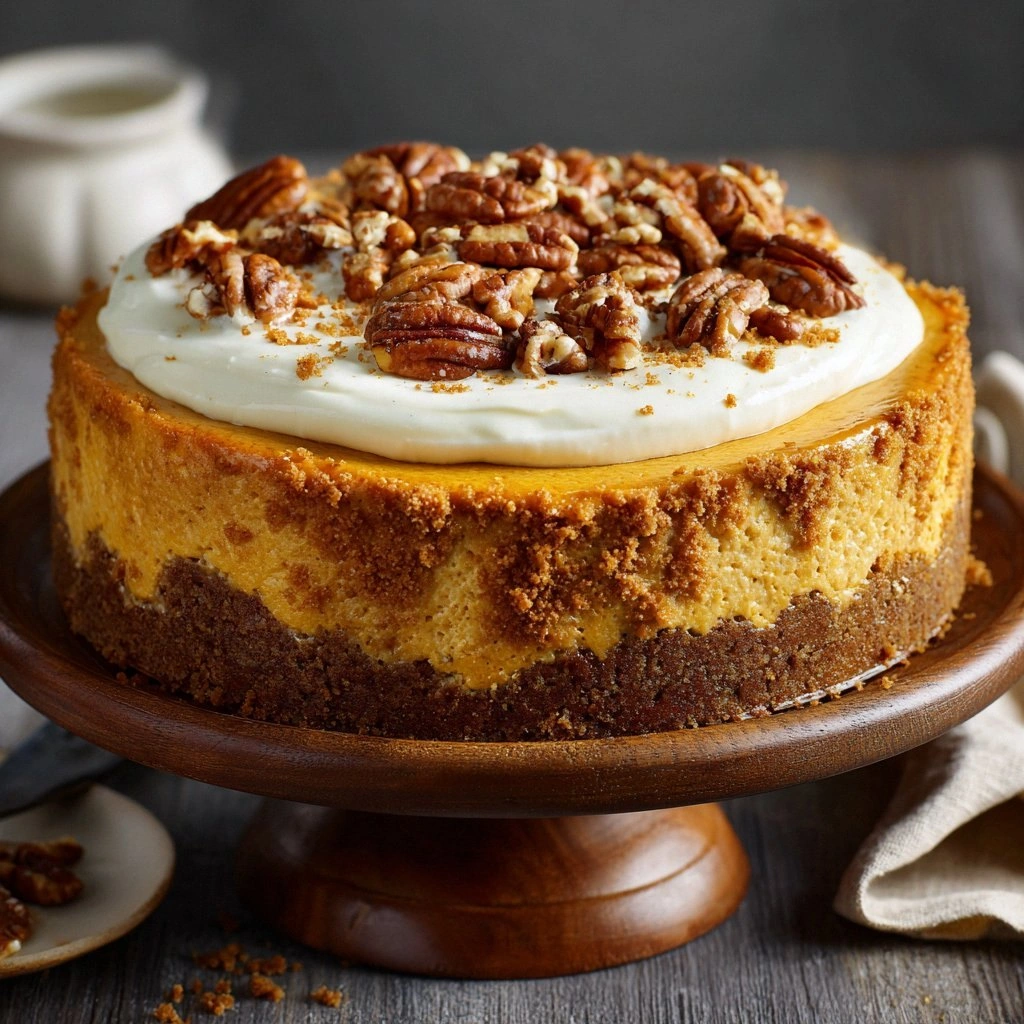
What makes this version stand out from the countless pumpkin cheesecakes out there is not just the perfect balance of sweet and tangy but the secret technique of layering a thin, buttery graham crust that crisps into a golden crunch while the filling remains luxuriously creamy. I’ve discovered that adding a splash of sour cream not only brightens the flavor but also creates a silky mouthfeel that melts in your mouth. The pecan topping, toasted to a caramelized perfection, adds a nutty crunch that contrasts the smooth interior. And the finishing swirl of sour cream, with a dusting of cinnamon, gives it a dramatic, almost theatrical finish. I dare you to taste this and not go back for seconds.
This is hands down the best version you'll ever make at home. The flavors sing together like a choir, the textures dance on your tongue, and the aroma will have your whole kitchen smelling incredible. I’ve been told that the first bite is so smooth that you almost forget you’re eating a dessert. The second bite is a delightful crunch from the pecan topping that snaps like a crisp autumn leaf. The third bite is the subtle warmth of cinnamon and nutmeg, which lingers like a comforting hug. I’ll be honest — I ate half the batch before anyone else got to try it.
Picture yourself pulling this out of the oven, the whole kitchen smelling incredible, the golden crust shining like a sunset. The cheesecake sits on the counter, a masterpiece waiting to be sliced. Your guests will gasp, then smile, then ask for the recipe. Stay with me here — this is worth it. Let me walk you through every single step — by the end, you'll wonder how you ever made it any other way.
What Makes This Version Stand Out
- Texture: The filling is silky and custard‑like, thanks to the precise blend of cream cheese, pumpkin puree, and sour cream. The crust adds a buttery crunch that balances the softness of the center.
- Flavor Depth: A whisper of warm spices—cinnamon, nutmeg, cloves—creates a cozy depth that elevates the pumpkin’s natural sweetness.
- Visual Appeal: The glossy swirl of sour cream and the toasted pecan topping make this cheesecake a feast for the eyes as well as the palate.
- Simplicity: Only a handful of pantry staples are required, yet the result feels sophisticated and indulgent.
- Make‑ahead Potential: The cheesecake can be assembled a day ahead, allowing the flavors to meld and the crust to firm up.
- Crowd‑Pleaser: Guests rave about the creamy texture and nutty crunch; it’s the dessert that ends every gathering on a high note.
Inside the Ingredient List
The Flavor Base
The pumpkin puree is the star of the show, delivering a natural sweetness and a subtle earthy undertone. Choosing a fresh, pure pumpkin puree rather than canned ensures a richer flavor profile and a smoother texture. If you skip the puree, the cheesecake will lack depth and will feel more like a plain cream cheese dessert. A good tip: let the puree cool slightly before mixing to prevent the batter from becoming too runny.
The Texture Crew
Cream cheese is the backbone of the filling, providing a tangy bite that balances the sweet pumpkin. It must be softened to room temperature to blend seamlessly without lumps. If you use cold cream cheese, the mixture will clump and the final texture will be uneven. A swap? For a lower‑fat version, use a 2% cream cheese, but expect a slightly less rich mouthfeel.
The Unexpected Star
Sour cream is the secret weapon that brightens the flavor and adds a silky mouthfeel. It also helps stabilize the filling, preventing cracks during baking. If you’re dairy‑free, Greek yogurt can be an excellent substitute, but use a 1:1 ratio and be prepared for a slightly tangier finish. The sour cream’s acidity also helps the cake set properly, giving it that perfect bite.
The Final Flourish
The pecan topping is the crowning glory, providing crunch and a caramelized nutty flavor that contrasts the smooth interior. Toasting the pecans in a dry skillet brings out their natural oils and adds a deep, buttery taste. If you’re allergic to nuts, walnuts or hazelnuts are great alternatives, each adding their own distinct flavor profile.
Everything's prepped? Good. Let's get into the real action...
The Method — Step by Step
- Preheat your oven to 325°F (160°C). Line an 8‑inch springform pan with parchment paper, ensuring the paper extends up the sides. This step prevents the crust from sticking and makes cleanup a breeze. Keep the oven rack in the center for even heat distribution.
- In a medium bowl, combine the graham cracker crumbs, melted butter, and 2 Tbsp sugar. Mix until the crumbs are evenly coated and the mixture looks like wet sand. Press the crumb mixture into the bottom of the prepared pan, using the back of a spoon to create an even layer. Chill in the fridge while you prepare the filling.
- In a large mixing bowl, beat the softened cream cheese on medium speed until smooth and creamy. Add the 1 cup sugar and continue to beat until the mixture is light and fluffy, about 2‑3 minutes. This aeration ensures a silky filling that won’t crack.
- Gradually fold in the pumpkin puree, sour cream, vanilla extract, ground cinnamon, nutmeg, cloves, and salt. Stir gently with a spatula, just until the ingredients are fully incorporated. Avoid over‑mixing; the batter should be smooth but not overly airy.
- Add the eggs one at a time, beating on low speed after each addition. The first egg should be fully incorporated before adding the next. This slow incorporation prevents curdling and keeps the batter silky.
- Pour the batter over the chilled crust, smoothing the top with a spatula. Tap the pan gently on the counter to release any air pockets. Place the pan on a baking sheet to catch any drips and to help the cake bake evenly.
- Bake for 45–50 minutes, or until the edges are set and the center has a slight wobble. A gentle jiggle indicates a perfectly set filling. The top should be a deep golden brown, not burnt.
- Watch Out: If the edges start to brown too quickly, tent the cheesecake with a piece of aluminum foil to prevent over‑browning while the center finishes baking.
- Once baked, remove the cheesecake from the oven and let it cool on a wire rack for 15 minutes. Then, cover it with plastic wrap and refrigerate for at least 4 hours, preferably overnight, to set the filling fully.
- While the cheesecake chills, prepare the pecan topping: In a small saucepan, melt 2 Tbsp butter over medium heat. Add the chopped pecans, ¼ cup brown sugar, and 1 tsp ground cinnamon. Stir until the sugar melts and coats the nuts, then remove from heat and let cool slightly.
That's it — you did it. But hold on, I've got a few more tricks that'll take this to another level. The final touch of a light dusting of powdered sugar or a drizzle of caramel sauce can elevate the presentation and flavor profile.
Insider Tricks for Flawless Results
The Temperature Rule Nobody Follows
Many bakers bake at 350°F, but 325°F is the sweet spot for pumpkin cheesecake. It allows the center to set slowly without cracking, giving you a perfectly creamy texture. I once baked at 350°F and the top browned too quickly, leaving a dry crust. Keep the oven rack centered and avoid opening the door during the first 30 minutes.
Why Your Nose Knows Best
Before you remove the cheesecake from the oven, inhale the aroma. A warm, buttery scent with hints of cinnamon and nutmeg indicates the batter is set. If you smell a faint raw flour scent, let it bake a few more minutes. Your nose is a reliable judge of doneness.
The 5-Minute Rest That Changes Everything
After removing the cheesecake, let it rest for exactly 15 minutes before covering. This short rest allows the residual heat to finish setting the center, preventing cracks when you refrigerate. I’ve seen cheesecakes crack after sudden temperature changes; this trick eliminates that risk.
The Pecans’ Secret Toast
Toast pecans until they release a nutty aroma, about 5 minutes. This step unlocks their natural oils and deepens the flavor. Skip it, and you’ll end up with a bland topping that doesn’t complement the creamy filling.
The Sour Cream Swirl
For an extra wow factor, swirl a spoonful of sour cream on top before baking. The swirl creates a marbled effect and adds a tangy contrast to the sweet filling. Make sure to bake it for the same time as the rest of the cheesecake.
The Final Dusting
Just before serving, dust the cheesecake with a light sprinkle of ground cinnamon or a pinch of sea salt. The salt enhances sweetness, while the cinnamon adds a subtle warmth. I always add a pinch of sea salt; it’s the secret to a balanced flavor.
Creative Twists and Variations
This recipe is a playground. Here are some of my favorite ways to switch things up:
Maple Bourbon Delight
Swap the vanilla extract with 2 Tbsp bourbon and add 1 Tbsp maple syrup. The bourbon gives a smoky depth, while the maple sweetens the filling. Perfect for holiday gatherings.
Chocolate Peanut Butter Swirl
Fold 2 Tbsp peanut butter into the batter and drizzle melted chocolate over the top before baking. The peanut butter adds richness, and the chocolate creates a decadent finish.
Coconut Cream Variation
Replace half the sour cream with coconut cream and add a pinch of nutmeg. The coconut adds a tropical twist, and the nutmeg ties it back to the pumpkin flavor.
Salted Caramel Crunch
Drizzle a thin layer of salted caramel sauce over the cooled cheesecake and top with crushed pretzels for a sweet‑and‑salty crunch.
Almond Flour Crust
Use almond flour instead of graham cracker crumbs for a gluten‑free crust. It adds a nutty flavor that complements the pumpkin.
Spiced Chai Topping
Stir 1 tsp chai spice blend into the pecan topping. The chai adds a complex spice profile that pairs beautifully with pumpkin.
Storing and Bringing It Back to Life
Fridge Storage
Cover the cheesecake tightly with plastic wrap or foil and refrigerate for up to 5 days. The cold environment keeps the filling firm and the flavors mellow. Before serving, let it sit at room temperature for 30 minutes to allow the flavors to open up.
Freezer Friendly
Wrap the cheesecake in parchment paper and then in a layer of foil. Freeze for up to 2 months. When ready to serve, thaw overnight in the fridge. The texture remains creamy, and the crust stays crisp.
Best Reheating Method
To reheat, place the cheesecake on a baking sheet and warm at 300°F (150°C) for 10–12 minutes. Add a tiny splash of water to the pan before reheating to create steam and keep the cheesecake moist. Let it cool slightly before slicing.