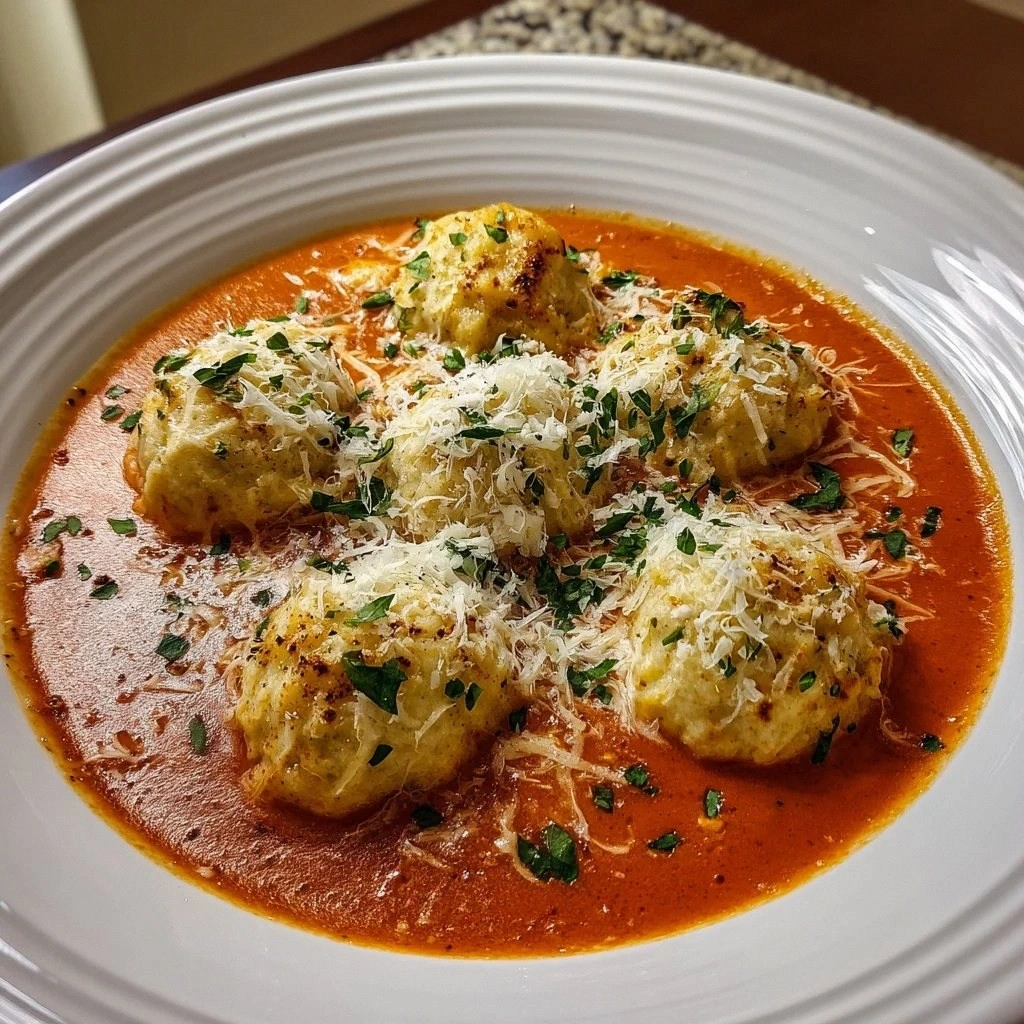
Picture this: it's a Thursday night, rain is drumming against your kitchen window like an impatient dinner guest, and you're standing in your socks staring into an almost-empty fridge. That was me exactly one month ago, convinced I had nothing worth eating until I spotted a sad carton of tomatoes, half an onion, and a nub of cheddar that looked like it had seen better decades. Instead of ordering takeout (again), I channelled my inner kitchen rebel and created what might be the most outrageously comforting bowl of tomato soup I've ever slurped. The kicker? I floated tender, cheesy dumplings right on top—because why should chicken and dumplings have all the fun?
I'll be honest—by the time I ladled the first test portion into my chipped blue bowl, I'd already eaten half the dumplings straight from the pot like some kind of cheese-crazed gremlin. The aroma alone should be bottled and sold as therapy: roasted tomatoes mingling with garlic, basil whispering in the background, and that buttery, cheesy perfume rising from dumplings so light they practically hover. One spoonful and I forgot the rain, forgot the long workweek, forgot every bland tomato soup I'd suffered through in cafeterias and well-meaning relatives' houses.
Most tomato soups are wallflowers at the comfort-food dance—thin, timid, forgettable. This version arrives like it owns the joint: silky but never gloppy, tangy but not sharp, with dumplings that puff into cheesy clouds and soak up the soup like edible sponges. The secret weapon isn't fancy heirloom tomatoes (though they help); it's a technique you'll see in exactly zero canned-soup commercials. Stay with me here—this is worth it.
Okay, ready for the game-changer? We're going to roast half the tomatoes until their edges blister and caramelize, while the rest simmer gently to keep that bright, fresh flavor. When those two worlds collide in your blender, you get layers of sweet, smoky, garden-fresh complexity that makes canned stuff taste like red water. Let me walk you through every single step—by the end, you'll wonder how you ever made it any other way.
What Makes This Version Stand Out
- Double-Tomato Technique: Roasting half the tomatoes concentrates their sugars into sticky, jammy nuggets, while the fresh batch keeps the soup tasting like summer in a bowl. Together they create a depth that single-method soups simply can't touch.
- Cheese Dumplings, Not Boring Croutons: Soft, pillowy dumplings studded with sharp cheddar bob around like savory marshmallows, soaking up soup and turning every spoonful into a treasure hunt.
- One-Pot Wonder: Despite tasting like you spent all day, the entire dish dirties exactly one Dutch oven and one bowl. That means more time for Netflix and less for dish-pan hands.
- Weeknight Friendly: From fridge to table in 45 minutes flat, with pantry staples you probably have right now. If you've ever struggled with finicky dumpling recipes, you're not alone—and I've got the fix.
- Make-Ahead Magic: The soup base improves overnight, and dumplings can be mixed, scooped, and frozen on a tray for instant comfort on demand. Future you will send present you a thank-you card.
- Crowd Reaction: I've served this to picky toddlers, carnivorous teenagers, and a skeptical mother-in-law who swore she hated tomato soup. Every bowl came back scraped clean.
Alright, let's break down exactly what goes into this masterpiece...
Inside the Ingredient List
The Flavor Base
Ripe tomatoes are the headliners here; anything less and the soup tastes like watered-down ketchup. Look for ones that feel heavy for their size and smell like the garden on a hot afternoon. If you can only find sad supermarket specimens, grab a can of whole San Marzanos and rinse off the juice—they're picked and packed at peak ripeness and beat out-of-season fresh ones every time.
Onion and garlic are the reliable backup singers. I use a medium yellow onion because it melts into sweet silkiness, but a white onion gives a sharper edge if you like contrast against the tomato's acidity. Three cloves of garlic might sound like vampire warfare, but most of the pungency mellows during simmering, leaving behind that savory backbone that makes people say, "I can't put my finger on it, but this tastes amazing."
The Texture Crew
Low-sodium vegetable broth is your insurance policy. It stretches the tomato flavor without stealing the show, and going low-sodium lets you control salt precisely. I've tried homemade chicken stock, and while tasty, it muddies the bright tomato notes—keep it veggie for clarity. If all you have is water plus a bouillon cube, no shame; just start with half the cube and taste as you go.
Heavy cream transforms the soup from brothy to luxurious. You can swap in half-and-half if you're counting calories, but you'll lose that tongue-coating richness that makes this feel like a restaurant dish. Coconut milk works for dairy-free friends, adding a subtle tropical perfume that surprisingly pairs well with tomato's acidity.
The Unexpected Star
Grated cheddar in the dumplings is my favorite party trick. The cheese melts into little pockets, creating tiny lava flows of flavor. A sharp, aged cheddar brings complexity, but even pre-shredded mild stuff works in a pinch. For maximum melt, toss the shreds in a teaspoon of flour before mixing; it keeps them suspended instead of sinking to the bottom of the dough.
All-purpose flour and baking powder are the dumpling's lift team. Spoon and level your flour instead of scooping—too much flour equals golf-ball density. Fresh baking powder is crucial; if yours has been lurking since last Thanksgiving, give it the fizz test in a cup of hot water before committing.
The Final Flourish
Fresh basil is sunshine on a rainy day. Add most during simmering for background aroma, then ribbon the rest just before serving so you hit the nose first. No fresh basil? Stir in a spoon of pesto or a pinch of dried oregano, but promise yourself you'll grow a windowsill plant next spring—you won't regret it.
Salt and pepper aren't afterthoughts here. Tomatoes crave salt the way teenagers crave Wi-Fi; without it they taste flat and vaguely metallic. I season at three stages: when sweating the onions, after pureeing, and again after adding cream. Freshly ground black pepper gives gentle heat, but a pinch of smoked paprika can add mysterious depth if you're feeling adventurous.
Everything's prepped? Good. Let's get into the real action...
The Method — Step by Step
- Preheat your oven to 425°F (220°C). While it's heating, halve two pounds of tomatoes and arrange them cut-side up on a parchment-lined sheet pan. Drizzle with a tablespoon of olive oil, sprinkle with salt and pepper, and slide them into the oven. You're looking for the edges to blister and blacken slightly—about 20 minutes—so don't wander off and start scrolling social media. That smoky sweetness is liquid gold.
- Meanwhile, warm a heavy soup pot over medium heat. Add a tablespoon of butter and a teaspoon of olive oil (the combo prevents burning), then toss in your diced onion. Stir occasionally until the pieces turn translucent and start to go golden at the edges, about six minutes. Your kitchen should smell like you're about to cook something incredible, because you are.
- Clear a little space in the center of the pot and add your minced garlic. Let it sizzle for just 30 seconds—any longer and it turns bitter faster than a bad breakup—then stir everything together. The aroma hitting your nose right now? Pure foundation-layer magic.
- Scrape the roasted tomatoes, along with every sticky bit of charred juice, into the pot. Add the remaining fresh tomatoes, pour in the vegetable broth, and toss in half the basil. Bring the whole thing to a lively simmer, then drop the heat so it bubbles gently. Cover partially and let the flavors mingle for 15 minutes while you work on dumpling dough.
- In a medium bowl, whisk together flour, baking powder, and a pinch of salt. Add grated cheddar and toss to coat the shreds evenly—this prevents cheesy clumps. Make a well in the center and pour in milk plus a tablespoon of melted butter. Stir just until the flour disappears; over-mixing activates gluten and gives you chewy little rocks instead of tender dumplings.
- Grab your immersion blender and puree the soup until it's silk-smooth. No immersion blender? Carefully transfer batches to a countertop blender, removing the center cap so steam can escape and covering loosely with a towel to prevent tomato Vesuvius. Return the velvety liquid to the pot and stir in the heavy cream. The color should shift from bright red to a mellow sunset orange.
- Bring the soup back to a gentle simmer. Using two spoons, scoop heaping teaspoons of dumpling dough and drop them onto the surface; they should plump as they hit the heat. Cover the pot tightly and let them steam for exactly 12 minutes—no peeking! The trapped steam cooks them through while keeping the soup below at a perfect bubble.
- Uncover, breathe in the cloud of tomato-cheese perfume, and test a dumpling by slicing it in half. It should be fluffy and cooked through, with melty cheese streaks. Stir in the remaining fresh basil, taste, and adjust salt and pepper. Ladle into warm bowls, crack some black pepper on top, and brace yourself for the sound of satisfied silence as everyone around the table stops talking and starts spooning.
That's it—you did it. But hold on, I've got a few more tricks that'll take this to another level...
Insider Tricks for Flawless Results
The Temperature Rule Nobody Follows
Most home cooks blast the soup at too high a heat after adding cream, causing it to curdle into grainy islands. Keep the flame at a gentle whisper—just enough for lazy bubbles around the edge. If you're nervous, temper the cream by whisking a ladle of hot soup into it first, then stream it back into the pot. Your future self will thank you when the texture stays velvety instead of resembling cottage cheese.
Why Your Nose Knows Best
Professional chefs taste with their noses first. If the soup smells bright and tomato-sweet, you're on track. If it smells metallic, add a pinch of sugar. If it smells flat, hit it with a splash of vinegar or lemon juice. Trust those olfactory instincts—they've saved more dishes than a kitchen full of gadgets.
The 5-Minute Rest That Changes Everything
After cooking, let the soup rest off heat for five minutes before serving. This brief pause allows the basil's volatile oils to re-fragrance the soup and the dumplings to absorb just enough broth to become flavor bombs without falling apart. A friend tried skipping this step once—let's just say it didn't end well, and her dumplings disintegrated like tissue paper in the rain.
The Cheese Swap That Elevates Dumplings
Try replacing half the cheddar with smoked gouda or gruyere. The smoky, nutty notes weave through the soup like jazz riffs, turning a simple bowl into something that feels Michelin-adjacent. Just keep total cheese volume the same to maintain dumpling structure.
Creative Twists and Variations
This recipe is a playground. Here are some of my favorite ways to switch things up:
Fire-Roasted Fiesta
Replace half the tomatoes with fire-roasted canned tomatoes and fold a minced chipotle pepper into the soup base. Swap pepper jack for cheddar in the dumplings and finish with cilantro instead of basil. The smoky heat wraps around you like a cozy blanket with a built-in space heater.
Creamy Tuscan Detour
Add a drained can of white beans to the soup before pureeing, then stir in a handful of baby spinach at the end. Use parmesan and a pinch of nutmeg in the dumplings. Suddenly you're lounging under a pergola in Florence, even if you're actually in a studio apartment next to a noisy radiator.
Spicy Thai-Inspired Remix
Swap the cream for coconut milk, whisk in a tablespoon of red curry paste, and add a stalk of lemongrass to the simmer. Use a mix of cheddar and mild Thai chili cheese in the dumplings, and finish with lime juice and cilantro. The result is a cross-continental hug in a bowl.
Roasted Red Pepper Makeover
Replace one pound of tomatoes with an equal amount of jarred roasted red peppers (blotted dry). The soup turns a dramatic scarlet, and the smoky-sweet flavor feels like velvet curtains in an old theater. Perfect for dinner parties where you want to look effortlessly sophisticated.
Bacon-Lover's Dream
Render three strips of chopped bacon in the pot before adding onions; reserve the crispy bits for garnish. Use bacon fat instead of butter for the dumplings. It's over-the-top, but sometimes over-the-top is exactly what Tuesday night demands.
Vegan But Still Indulgent
Use coconut milk, swap cheddar for nutritional yeast and vegan shredded cheese, and replace butter with olive oil in the dumplings. The result is shockingly creamy and satisfying, proving you don't need dairy to achieve comfort-food nirvana.
Storing and Bringing It Back to Life
Fridge Storage
Let the soup cool completely, then transfer to airtight containers. It keeps up to four days refrigerated, though dumplings will gradually absorb broth and become softer—still delicious, just more spoon-bread than cloud. Store dumplings separately if you like them ultra-fluffy; they last two days in their own container.
Freezer Friendly
Freeze the soup base (minus cream and dumplings) for up to three months. Thaw overnight in the fridge, then reheat gently and add cream fresh. Dumpling dough freezes brilliantly: scoop dollops onto a tray, freeze solid, then bag the frozen morsels. Drop them straight into simmering soup for eight extra minutes when you need a fast comfort fix.
Best Reheating Method
Reheat soup slowly over medium-low heat, stirring often and adding a splash of broth or water to loosen it. Microwave works in a pinch—use 50% power in one-minute bursts, stirring between. Add a tiny splash of water before reheating; it steams back to perfection and prevents the dreaded tomato-skin film from forming on top.